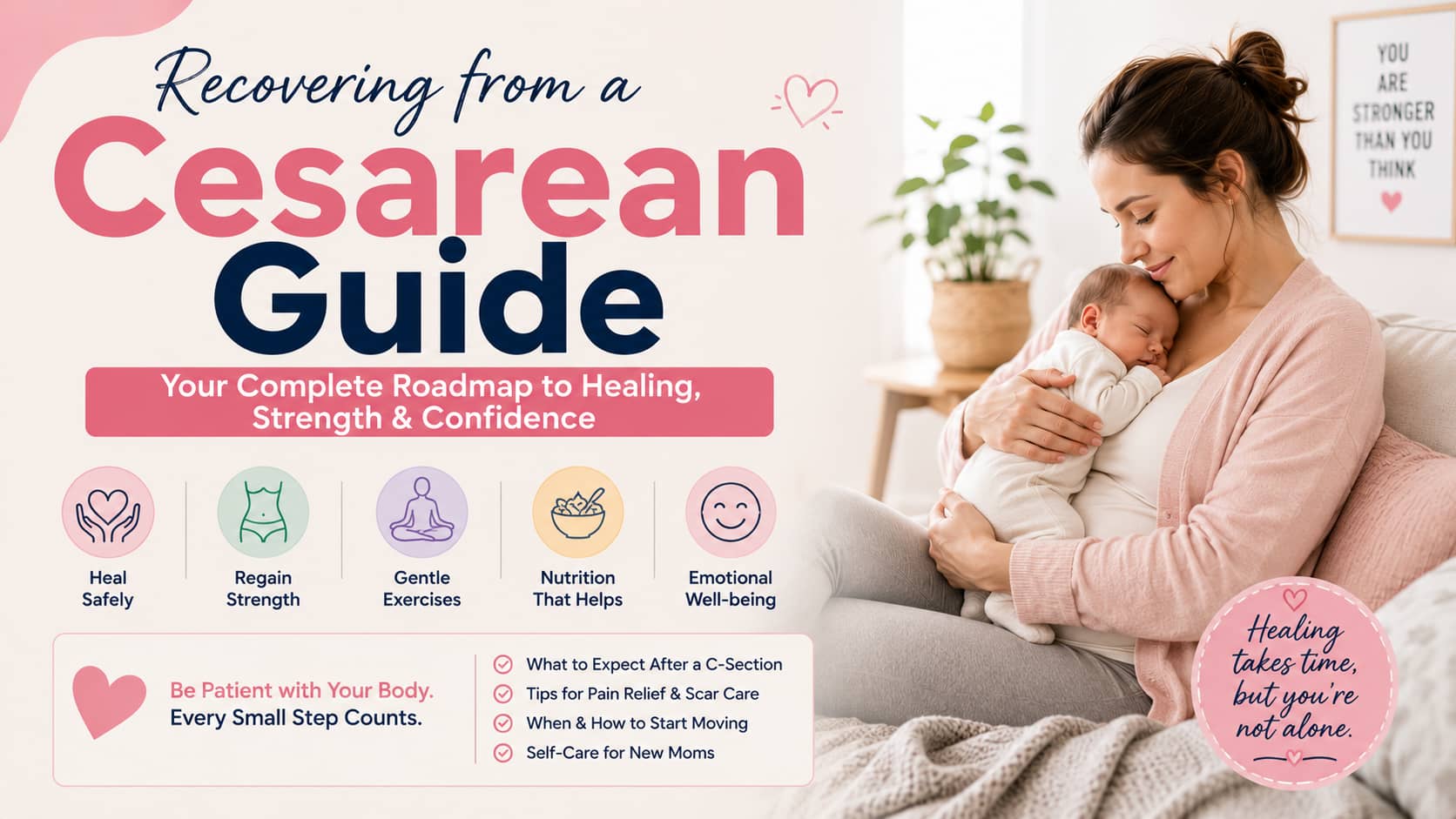
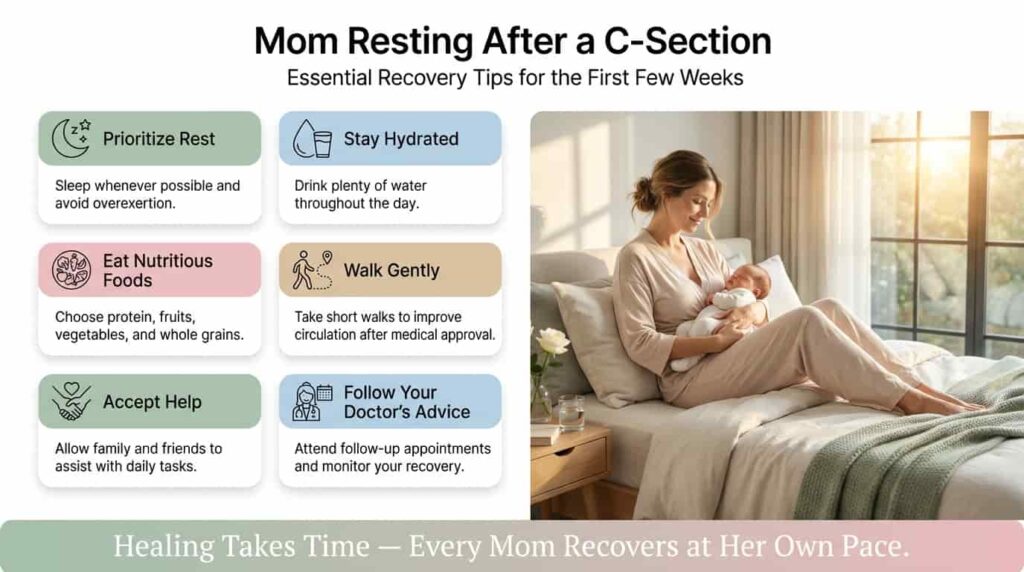
Recovering from a cesarean usually takes about 6 to 8 weeks, although complete internal healing may continue for several months. Gentle walking, proper rest, nutritious meals, staying hydrated, and following your healthcare provider’s instructions can help support a smoother recovery. Avoid heavy lifting, strenuous exercise, and driving until you receive medical clearance.
Table of Contents
Recovering from a Cesarean: The Complete Guide
Bringing your baby home is one of life’s most exciting moments. But if you delivered by cesarean section (C-section), you’re also recovering from major abdominal surgery while caring for a newborn.
Many new moms expect to feel tired, but they’re often surprised by how challenging simple tasks—like getting out of bed, standing up, laughing, or even holding the baby for long periods—can be during the first few weeks.
The good news is that recovery gets easier with time. Every small step you take helps your body heal.
Whether your C-section was planned or unexpected, understanding the recovery process can help you feel more confident and less overwhelmed.
In this guide, you’ll learn:
What to expect during each stage of healing
How long recovery typically takes
Safe ways to manage pain
When to begin walking and exercising
Tips to support faster healing
Warning signs that require medical attention
With patience, realistic expectations, and proper self-care, most moms make a strong recovery and gradually return to their normal routines.
FitMomWay Tip: Recovery isn’t a race. Healing at your own pace is one of the best gifts you can give yourself and your baby.
What Is a Cesarean Section?
A cesarean section, often called a C-section, is a surgical procedure used to deliver a baby through incisions made in the mother’s abdomen and uterus.
Healthcare providers may recommend a cesarean when a vaginal birth isn’t the safest option for the mother, the baby, or both.
Common reasons include:
Baby in breech position
Labor not progressing
Multiple pregnancies
Placenta previa
Fetal distress
Previous cesarean deliveries
Certain maternal health conditions
Although C-sections are common and generally safe, they are still major surgeries. Recovery usually takes longer than recovery after a vaginal birth because both the abdominal muscles and uterus need time to heal.
Why Recovery Takes Time
After surgery, your body is healing on several levels at once.
Your uterus is shrinking
During pregnancy, your uterus expands dramatically. After birth, it gradually returns to its pre-pregnancy size over several weeks.
Your abdominal muscles are repairing
The surgical incision passes through several layers of tissue, including skin, fat, connective tissue, and the uterus. These tissues need time to recover.
Hormones are changing
Levels of pregnancy hormones drop quickly after delivery while hormones that support breastfeeding increase. These hormonal shifts can affect energy, mood, and healing.
You’re adjusting to life with a newborn
Frequent feeding, interrupted sleep, and learning your baby’s routine can make recovery feel even more demanding.
How Long Does It Take to Recover from a Cesarean?
Recovery isn’t the same for everyone, but most women follow a similar healing timeline.
Medical checkup and possible clearance for exercise
3–6 Months
Ongoing internal healing and strength rebuilding
While many moms feel significantly better after six to eight weeks, it’s important to remember that internal tissues may continue healing for several months.
Some women recover more quickly, while others need additional time depending on factors such as:
Emergency vs. planned C-section
Overall health before pregnancy
Sleep quality
Nutrition
Activity level
Presence of complications
Support at home
Avoid comparing your recovery with someone else’s. Every birth experience is different, and healing is highly individual.
FitMomWay Tip: Focus on progress rather than perfection. Small improvements each day add up over time.
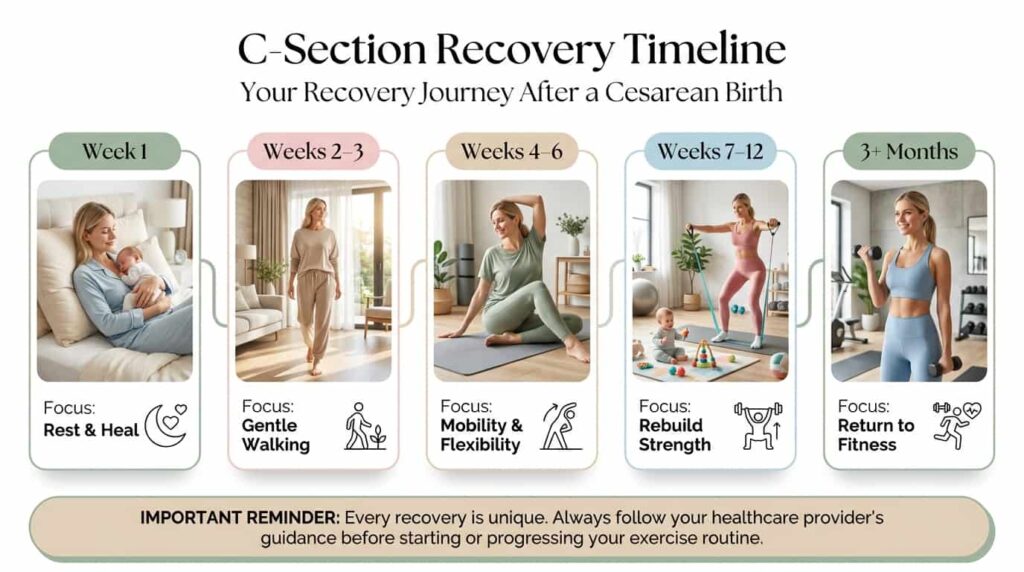
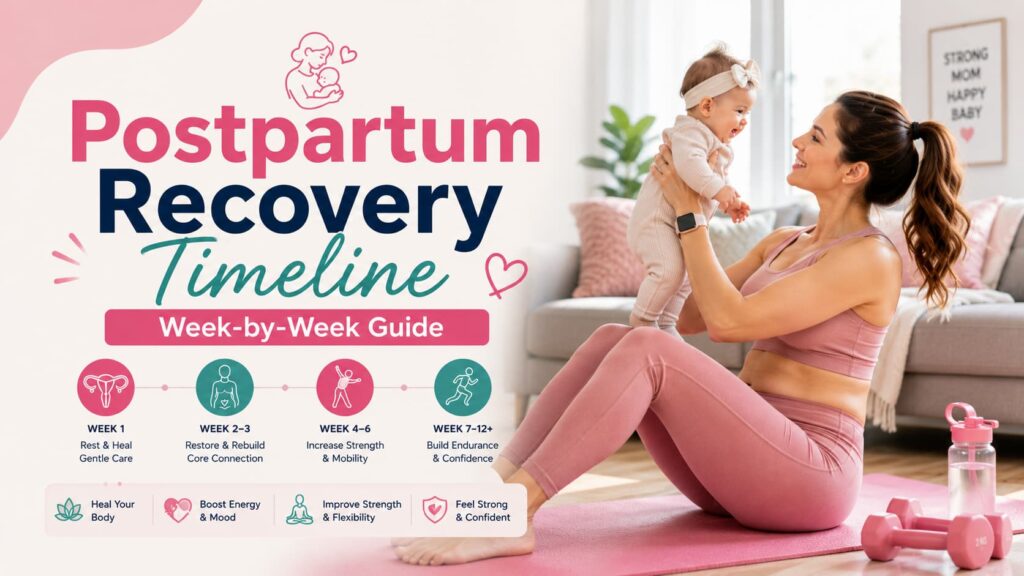
Week-by-Week Cesarean Recovery Timeline
Knowing what to expect each week can make recovery feel much less overwhelming. While every mom heals differently, this timeline gives you a realistic idea of how your body may recover after a cesarean birth.
Remember that healing isn’t always linear. Some days you’ll feel stronger, while other days you may need more rest—and that’s completely normal.
The First 24 Hours After Surgery
The first day after your cesarean focuses on rest, pain management, and preventing complications.
Your healthcare team will monitor your:
Blood pressure
Heart rate
Bleeding
Incision
Pain levels
Ability to move safely
You may feel:
Abdominal soreness
Tightness around the incision
Difficulty standing upright
Fatigue
Shaking or chills from anesthesia
Gas pain
Although getting out of bed may seem difficult, your nurse will usually encourage you to take a few short walks within the first day. Gentle movement helps improve circulation and lowers the risk of blood clots.
FitMomWay Tip: Hold a pillow against your incision when coughing, laughing, or sneezing. This can make these movements much more comfortable.
Week 1: Focus on Rest and Gentle Movement
The first week is often the most challenging. Your body is recovering from major surgery while adjusting to life with a newborn.
During this stage, your main priorities should be:
Rest whenever possible
Stay hydrated
Eat nutritious meals
Walk short distances around your home
Take prescribed pain medication if needed
Keep your incision clean and dry
It’s normal to experience:
Incision tenderness
Mild swelling
Light vaginal bleeding
Uterine cramping
Tiredness
Difficulty getting in and out of bed
Avoid lifting anything heavier than your baby.
Ask family members or friends for help with cooking, laundry, and household chores so you can focus on healing.
Week 2: Moving a Little More Comfortably
By the second week, many moms notice that pain gradually begins to improve.
You may find it easier to:
Walk around the house
Sit and stand
Carry your baby
Climb a few stairs slowly
Shower independently
However, your body is still healing internally.
Continue avoiding:
Heavy lifting
Running
Intense exercise
Vacuuming
Carrying heavy grocery bags
If your incision becomes increasingly red, swollen, or starts draining fluid, contact your healthcare provider promptly.
Weeks 3–4: Building Strength Slowly
Around weeks three and four, everyday activities usually become much easier.
You may notice:
Less incision discomfort
Increased energy
Better posture
Improved mobility
Less dependence on pain medication
This is a good time to continue increasing your walking distance gradually.
FitMomWay Tip: If an activity increases your pain later that day, it may be a sign you did too much.
Weeks 5–6: Returning to Daily Activities
Many women feel much stronger by week six.
At your postpartum checkup, your healthcare provider will examine your incision and discuss your recovery.
You may receive clearance to:
Drive
Resume light exercise
Lift slightly heavier objects
Return to work, depending on your job
Restart certain fitness activities
Even if you feel well, remember that internal tissues are still healing.
Start slowly and increase activity gradually.
Weeks 7–8 and Beyond
By this stage, many moms are close to returning to their normal routines.
You may be able to:
Take longer walks
Begin beginner postpartum workouts
Practice gentle core activation
Improve your overall strength
Resume many everyday activities
Some women still experience:
Mild numbness around the scar
Occasional pulling sensations
Fatigue after busy days
These symptoms often continue improving over the following months.
Complete internal healing may take three to six months.
How to Manage Pain During Recovery
Some discomfort is expected after a cesarean, especially during the first two weeks.
Pain usually becomes less intense each day.
To manage discomfort safely:
Take medications exactly as prescribed.
Walk a little each day.
Drink plenty of water.
Avoid sitting in one position for long periods.
Support your abdomen with a pillow when coughing or laughing.
Wear loose, comfortable clothing that doesn’t rub against the incision.
Many moms also find that getting enough sleep—even short naps—helps their body recover faster.
Walking After a Cesarean
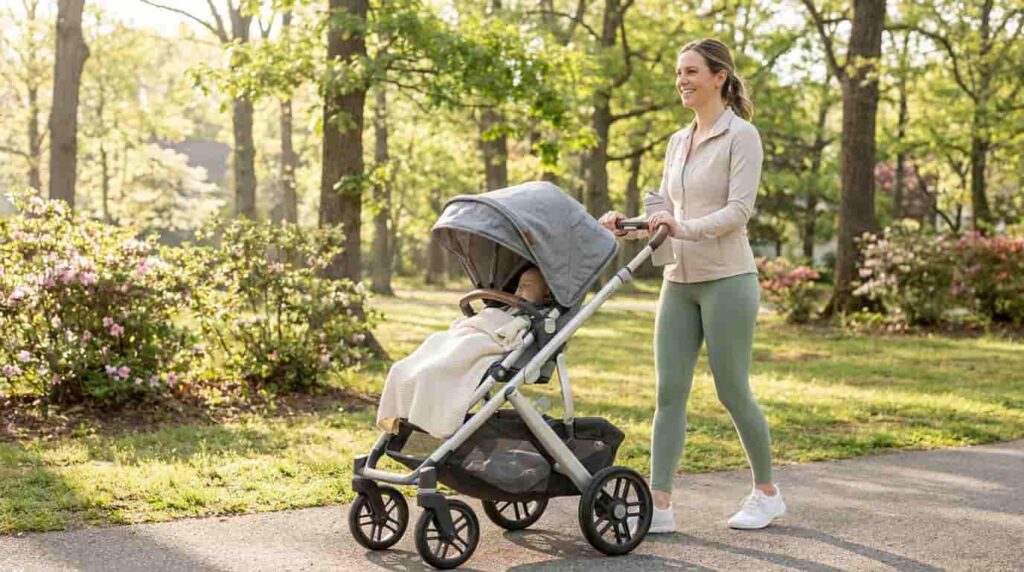
Walking is one of the best forms of exercise after a C-section.
It improves:
Blood circulation
Digestion
Energy levels
Mood
Recovery
Muscle function
Here’s a simple walking plan you can follow if approved by your healthcare provider:
Recovery Stage
Walking Goal
Day 1–2
Walk around your hospital room several times
Week 1
5–10 minutes once or twice daily
Week 2
10–15 minutes daily
Weeks 3–4
20–30 minutes most days
Week 6+
Gradually return to longer walks and light exercise with medical clearance
Walk at a pace that allows you to talk comfortably. If you feel dizzy, overly tired, or experience increased pain, stop and rest.
Activities to Avoid During Recovery
Even if you’re feeling better, certain activities can delay healing or increase the risk of complications.
Avoid:
Heavy lifting
High-impact workouts
Running
Jumping
Intense abdominal exercises
Swimming until your provider says it’s safe
Driving before you’re comfortable and medically cleared
Sexual activity until your postpartum checkup
Listening to your body is just as important as following the calendar.
Warning Signs You Should Never Ignore
Most recoveries are uncomplicated, but some symptoms require immediate medical attention.
Contact your healthcare provider if you notice:
Fever higher than 100.4°F (38°C)
Increasing redness around the incision
Pus or foul-smelling drainage
Severe abdominal pain
Heavy vaginal bleeding
Large blood clots
Chest pain
Difficulty breathing
Swelling or pain in one leg
Persistent headache with vision changes
Signs of postpartum depression, such as overwhelming sadness, hopelessness, or thoughts of harming yourself or your baby
Seeking medical advice early can help prevent more serious complications and support a safer recovery.
FitMomWay Tip: Never compare your healing journey to someone else’s. Every cesarean birth, every body, and every recovery is different. Celebrate small milestones, rest when your body asks for it, and remember that taking care of yourself is an important part of taking care of your baby.
Eating Well to Support Cesarean Recovery
The food you eat during the first few weeks after a C-section plays an important role in how your body heals. A balanced diet provides the nutrients your incision, muscles, and immune system need to recover while also giving you the energy to care for your newborn.
If you’re breastfeeding, your nutritional needs are even higher, making healthy meals and snacks even more important.
Try to include these nutrients in your daily diet:
Nutrient
Why It Matters
Best Food Sources
Protein
Repairs muscles and tissues
Chicken, fish, eggs, Greek yogurt, beans, tofu
Vitamin C
Supports wound healing
Oranges, strawberries, kiwi, bell peppers
Iron
Replaces blood lost during delivery
Lean beef, spinach, lentils, fortified cereals
Fiber
Helps prevent constipation
Oats, fruits, vegetables, whole grains
Healthy Fats
Supports recovery and hormone health
Avocados, nuts, seeds, olive oil
Water
Prevents dehydration and supports breastfeeding
Water, milk, soups, herbal teas
Eating small, balanced meals every 3–4 hours can also help keep your energy levels steady throughout the day.
FitMomWay Tip: Prepare freezer meals before your due date or ask family members to help with cooking during the first few weeks.
Preventing Constipation After a C-Section
Constipation is one of the most common complaints after a cesarean delivery. Pain medications, reduced activity, dehydration, and the effects of surgery can all slow your digestive system.
To help keep your bowels moving:
Drink at least 8–10 glasses of water each day.
Eat plenty of fruits and vegetables.
Choose whole-grain bread, brown rice, and oats.
Include fiber-rich foods with every meal.
Walk for a few minutes several times a day.
Take stool softeners if recommended by your healthcare provider.
Avoid straining during bowel movements, as it can increase discomfort around your incision.
Caring for Your Cesarean Incision
Your incision will continue healing over several weeks, so proper care is essential to reduce the risk of infection.
To help your incision heal:
Keep the area clean and dry.
Wash gently with mild soap and water.
Pat the incision dry instead of rubbing it.
Wear loose, breathable clothing.
Avoid scratching or picking at scabs.
Follow your provider’s instructions for dressing changes if needed.
As your incision heals, you may notice:
Mild itching
Tightness
Numbness
Slight pulling sensations
These are often a normal part of the healing process.
However, contact your healthcare provider if you notice:
Increasing redness
Swelling
Warmth around the incision
Foul-smelling drainage
Opening of the wound
Fever
Understanding Cesarean Scar Healing
Many moms worry about how their scar will look after a C-section. While scars vary from person to person, most fade significantly over time.
Scar healing usually happens in stages:
First Few Weeks
The scar may appear red, swollen, and slightly raised.
After Two to Three Months
Redness often begins to fade, and the scar becomes flatter.
Six Months to One Year
The scar continues softening and usually becomes much less noticeable.
Avoid exposing a healing scar to direct sunlight, as this can cause permanent darkening.
Once your healthcare provider says it’s safe, gentle scar massage may help improve flexibility and reduce tightness.
Rebuilding Your Core After a Cesarean
Your abdominal muscles need time to recover after surgery. Trying to strengthen your core too soon may increase discomfort and slow healing.
Instead of jumping into traditional abdominal workouts, begin with gentle movements that activate your deep core muscles.
Examples include:
Belly breathing
Diaphragmatic breathing
Pelvic tilts
Gentle core engagement while lying down
Proper posture exercises
These simple exercises help reconnect your abdominal muscles before progressing to more challenging workouts.
FitMomWay Tip: Strong recovery starts with proper breathing—not crunches.
Pelvic Floor Recovery After a C-Section
Many women assume their pelvic floor isn’t affected because they had a cesarean delivery.
In reality, pregnancy itself places significant pressure on the pelvic floor muscles.
Pelvic floor exercises can help improve:
Bladder control
Core stability
Posture
Lower back support
Overall recovery
Simple pelvic floor contractions (often called Kegel exercises) can usually be started soon after delivery if they are comfortable and approved by your healthcare provider.
If you experience:
Urinary leakage
Pelvic heaviness
Pain
Difficulty controlling bowel movements
consider asking your provider about seeing a pelvic floor physical therapist.
When Can You Exercise Again?
Many moms are eager to return to exercise, but recovery should happen gradually.
Most healthcare providers recommend waiting until your postpartum checkup before beginning structured workouts.
Once you receive medical clearance, you can slowly progress through these stages:
Stage 1
Gentle walking
Deep breathing
Pelvic floor exercises
Light stretching
Stage 2
Core activation
Bodyweight movements
Mobility exercises
Light resistance training
Stage 3
Longer walks
Low-impact cardio
Beginner strength workouts
Postpartum fitness routines
Stage 4
Running
Higher-intensity workouts
Full-body strength training
More advanced fitness programs
Listen to your body throughout each stage. Pain is a sign to slow down.
Common Mistakes That Can Slow Recovery
Avoiding a few common mistakes can make a big difference in how smoothly you heal.
Doing Too Much Too Soon
Feeling better doesn’t always mean your body has fully healed internally.
Increase activity gradually instead of trying to return to your normal routine immediately.
Skipping Rest
Sleep may be difficult with a newborn, but rest is essential for healing. Accept help whenever it’s available.
Ignoring Pain
Pain is your body’s way of telling you to slow down. Don’t try to “push through” discomfort.
Poor Nutrition
Your body needs extra calories, protein, vitamins, and fluids to recover from surgery and support breastfeeding.
Lifting Heavy Objects
Avoid lifting anything heavier than your baby until your healthcare provider says it’s safe.
Forgetting About Mental Health
Physical recovery is only one part of postpartum healing.
Hormonal changes, lack of sleep, and adjusting to motherhood can all affect emotional well-being.
If you’re feeling persistently overwhelmed, anxious, or depressed, talk to your healthcare provider. Seeking help is a sign of strength—not weakness.
FitMomWay Tip: Healing isn’t just about your incision. Caring for your physical and emotional health will help you recover more completely and enjoy this special time with your new baby.
Frequently Asked Questions
1. How long does it take to recover from a cesarean?
Most women recover enough to resume many daily activities within 6 to 8 weeks. However, complete healing of the abdominal muscles and uterus can take several months. Recovery time varies depending on your overall health, whether your C-section was planned or emergency, and if any complications occurred.
2. When can I start walking after a C-section?
In most cases, healthcare providers encourage gentle walking within 12 to 24 hours after surgery. Short walks improve blood circulation, reduce the risk of blood clots, help relieve gas pain, and support faster recovery. Start slowly and increase your walking distance as you feel stronger.
3. When can I exercise after a cesarean?
Most moms can begin light postpartum exercises after receiving medical clearance at their 6-week postpartum checkup. Walking and gentle pelvic floor exercises are often appropriate earlier, but avoid intense workouts, running, or heavy lifting until your provider says it’s safe.
4. How should I sleep after a C-section?
Many women find these sleeping positions more comfortable:
On your back with a pillow supporting your knees
On your side with a pillow between your knees
Slightly elevated using extra pillows
Choose a position that doesn’t put pressure on your incision and allows you to get in and out of bed comfortably.
5. When can I drive after a C-section?
Most healthcare providers recommend waiting about 2 to 6 weeks, depending on your recovery. You should only drive when you can comfortably wear a seatbelt, brake suddenly if necessary, and are no longer taking prescription pain medication that affects alertness.
6. Is it normal to feel numb around my C-section scar?
Yes. Mild numbness, tingling, or a pulling sensation around the incision is common and may last for several months as nerves heal. If numbness worsens or is accompanied by severe pain, contact your healthcare provider.
7. When can I lift heavier objects?
For the first several weeks, avoid lifting anything heavier than your baby. Heavy lifting can place extra stress on healing abdominal muscles and increase discomfort. Always follow your healthcare provider’s recommendations before returning to heavier activities.
8. How can I help my C-section scar heal?
To support healthy scar healing:
Keep the incision clean and dry.
Wear loose-fitting clothing.
Eat a balanced diet rich in protein and vitamin C.
Stay hydrated.
Avoid smoking.
Protect the scar from direct sunlight.
Follow your healthcare provider’s wound care instructions.
9. Can I have another baby after a cesarean?
Yes. Many women go on to have healthy pregnancies after a C-section. Depending on your medical history and the type of incision you had, you may even be a candidate for a vaginal birth after cesarean (VBAC). Discuss your options with your healthcare provider before planning another pregnancy.
10. When should I call my doctor during recovery?
Seek medical advice immediately if you experience:
Fever above 100.4°F (38°C)
Heavy vaginal bleeding
Severe abdominal pain
Increasing redness or swelling around the incision
Pus or foul-smelling drainage
Chest pain or difficulty breathing
Swelling or pain in one leg
Persistent sadness, anxiety, or thoughts of harming yourself or your baby
Prompt medical attention can help prevent serious complications.
Frequently Asked Questions
How long does it take to recover from a cesarean?
Most women recover enough to resume many daily activities within 6 to 8 weeks. However, complete healing of the abdominal muscles and uterus can take several months. Recovery time varies depending on your overall health, whether your C-section was planned or emergency, and if any complications occurred.
When can I start walking after a C-section?
In most cases, healthcare providers encourage gentle walking within 12 to 24 hours after surgery. Short walks improve blood circulation, reduce the risk of blood clots, help relieve gas pain, and support faster recovery. Start slowly and increase your walking distance as you feel stronger.
When can I exercise after a cesarean?
Most moms can begin light postpartum exercises after receiving medical clearance at their 6-week postpartum checkup. Walking and gentle pelvic floor exercises are often appropriate earlier, but avoid intense workouts, running, or heavy lifting until your provider says it’s safe.
How should I sleep after a C-section?
Many women find these sleeping positions more comfortable: On your back with a pillow supporting your knees On your side with a pillow between your knees Slightly elevated using extra pillows Choose a position that doesn’t put pressure on your incision and allows you to get in and out of bed comfortably.
When can I drive after a C-section?
Most healthcare providers recommend waiting about 2 to 6 weeks, depending on your recovery. You should only drive when you can comfortably wear a seatbelt, brake suddenly if necessary, and are no longer taking prescription pain medication that affects alertness.
Is it normal to feel numb around my C-section scar?
Yes. Mild numbness, tingling, or a pulling sensation around the incision is common and may last for several months as nerves heal. If numbness worsens or is accompanied by severe pain, contact your healthcare provider.
When can I lift heavier objects?
For the first several weeks, avoid lifting anything heavier than your baby. Heavy lifting can place extra stress on healing abdominal muscles and increase discomfort. Always follow your healthcare provider’s recommendations before returning to heavier activities.
How can I help my C-section scar heal?
To support healthy scar healing: Keep the incision clean and dry. Wear loose-fitting clothing. Eat a balanced diet rich in protein and vitamin C. Stay hydrated. Avoid smoking. Protect the scar from direct sunlight. Follow your healthcare provider’s wound care instructions.
Can I have another baby after a cesarean?
Yes. Many women go on to have healthy pregnancies after a C-section. Depending on your medical history and the type of incision you had, you may even be a candidate for a vaginal birth after cesarean (VBAC). Discuss your options with your healthcare provider before planning another pregnancy.
When should I call my doctor during recovery?
Seek medical advice immediately if you experience: Fever above 100.4°F (38°C) Heavy vaginal bleeding Severe abdominal pain Increasing redness or swelling around the incision Pus or foul-smelling drainage Chest pain or difficulty breathing Swelling or pain in one leg Persistent sadness, anxiety, or thoughts of harming yourself or your baby
Disclaimer
FitMomWay provides educational information only and does not offer medical advice. Always consult your doctor, obstetrician, midwife, or another qualified healthcare professional before starting any postpartum fitness, nutrition, or recovery program.