
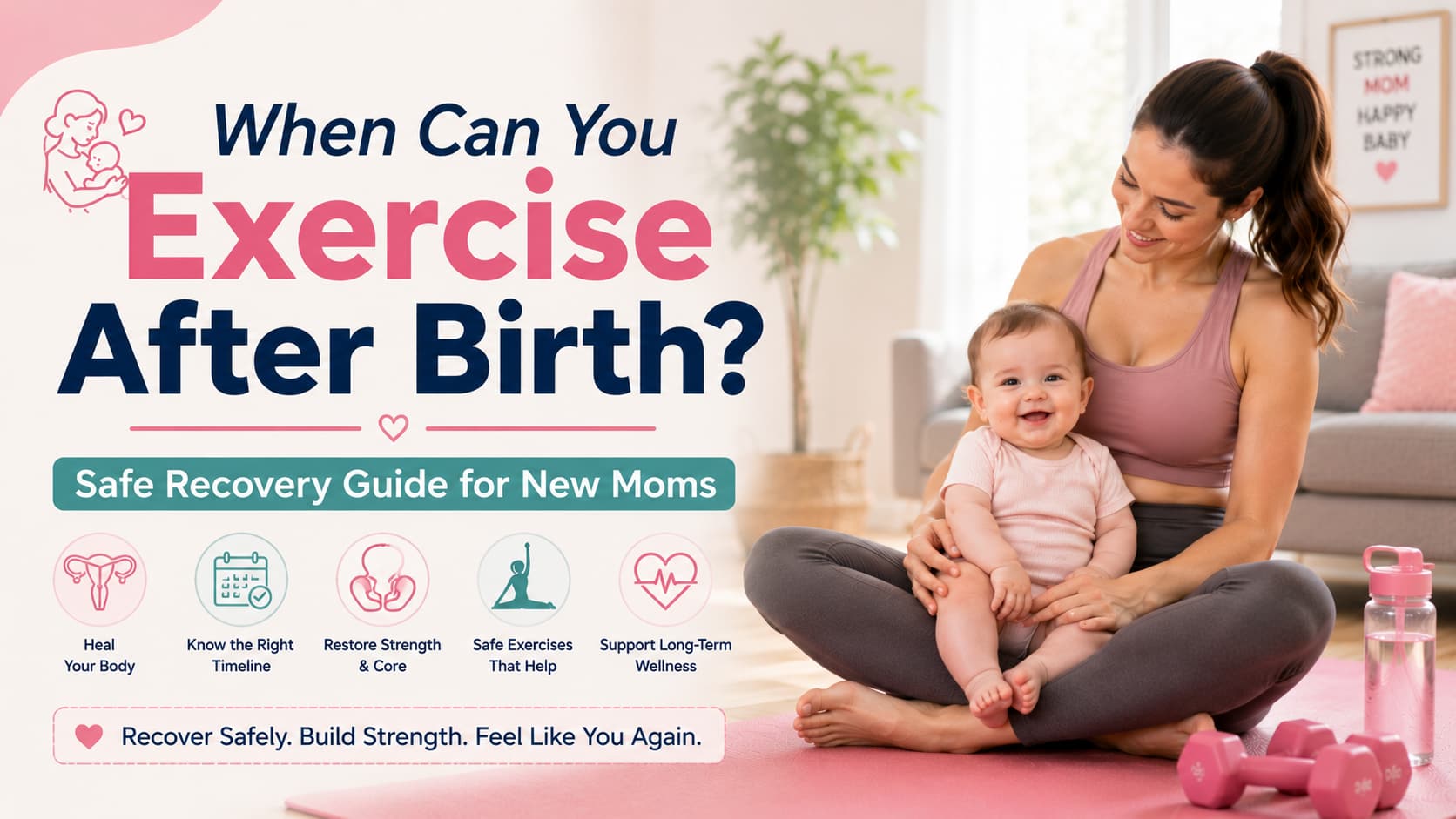
If you’re asking when can you exercise after birth, you’re not alone.
It’s one of the first questions many new moms have after welcoming their baby. Whether you had a vaginal birth or a C-section, it’s natural to wonder when it’s safe to start moving your body again.
You may be eager to rebuild your strength, increase your energy, or simply feel more like yourself. At the same time, you don’t want to exercise too soon and slow down your recovery.
The good news is that gentle movement is often possible before returning to structured workouts. However, when can you exercise after birth depends on several important factors, including the type of delivery you had, how your body is healing, and your healthcare provider’s advice.
In this guide, you’ll learn when can you exercise after birth, what types of exercise are generally appropriate after a vaginal birth or C-section, why doctor approval matters, and which warning signs mean you should stop exercising immediately.
By the end of this article, you’ll have a clear understanding of how to return to exercise safely and confidently while supporting your postpartum recovery.
Quick Answer: When Can You Exercise After Birth?
Many new moms ask, when can you exercise after birth?
The answer depends on your recovery.
For many healthy women, gentle walking and light daily movement may begin soon after delivery if approved by their healthcare provider. More structured postpartum exercise usually starts after your postpartum checkup and medical clearance. Women recovering from a C-section often need additional healing time before progressing to strength training or higher-impact activities.
The safest approach is to increase activity gradually while listening to your body and following your healthcare provider’s recommendations.
Table of Contents
Why Every Postpartum Recovery Is Different
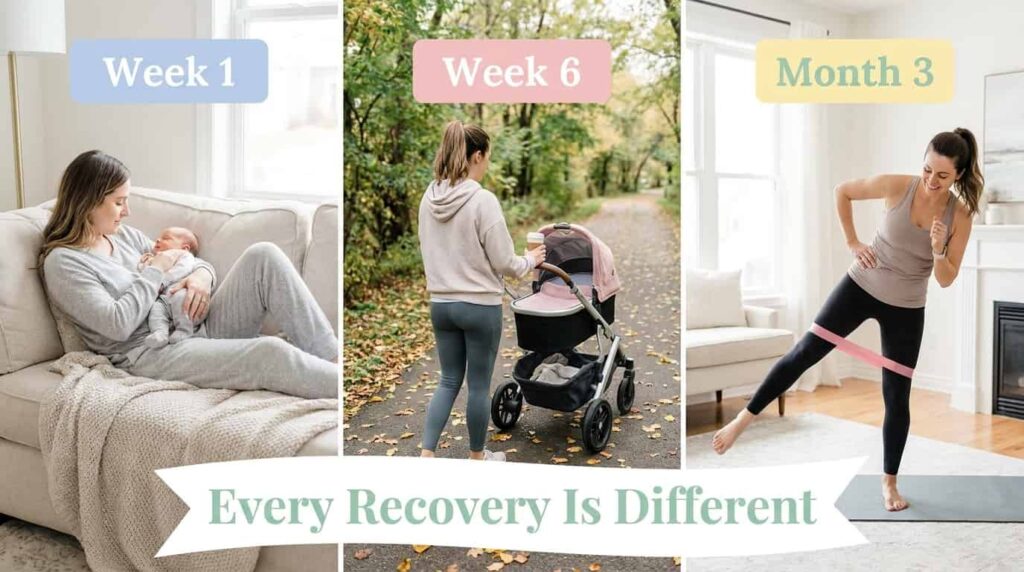
Before answering when can you exercise after birth, it’s important to understand that every recovery is unique.
No two pregnancies, deliveries, or postpartum experiences are exactly the same.
Some women recover quickly after an uncomplicated vaginal birth, while others may need more time because of a difficult labor, a C-section, or other medical complications.
Several factors affect when can you exercise after birth, including:
Your Type of Delivery
Recovery is usually different after:
- Vaginal birth
- Assisted vaginal birth
- Planned C-section
- Emergency C-section
Each type of delivery places different demands on your body.
Your Overall Health
Your health before pregnancy, during pregnancy, and after delivery all play a role in how quickly your body heals.
Women with pregnancy complications or certain medical conditions may need a longer recovery period before beginning structured exercise.
Your Fitness Level Before Pregnancy
If you exercised regularly before and during pregnancy, you may find it easier to return to physical activity.
However, this does not mean you should rush your recovery.
Even experienced athletes need time to heal after giving birth.
Sleep and Energy Levels
Sleep deprivation is common during the postpartum period.
If you’re exhausted from caring for your newborn, your body may benefit more from rest than from a workout.
Remember that recovery includes both movement and rest.
Healing of Your Pelvic Floor and Core
Pregnancy and childbirth place significant stress on your pelvic floor muscles and abdominal wall.
These muscles need time to recover before you begin higher-impact activities such as running or jumping.
FitMomWay Tip
Don’t compare your recovery with another mom’s journey.
The answer to when can you exercise after birth will be different for every woman because every body heals at its own pace.
When Can You Exercise After Birth After a Vaginal Birth?
If you had an uncomplicated vaginal delivery, you may be wondering when can you exercise after birth without affecting your recovery.
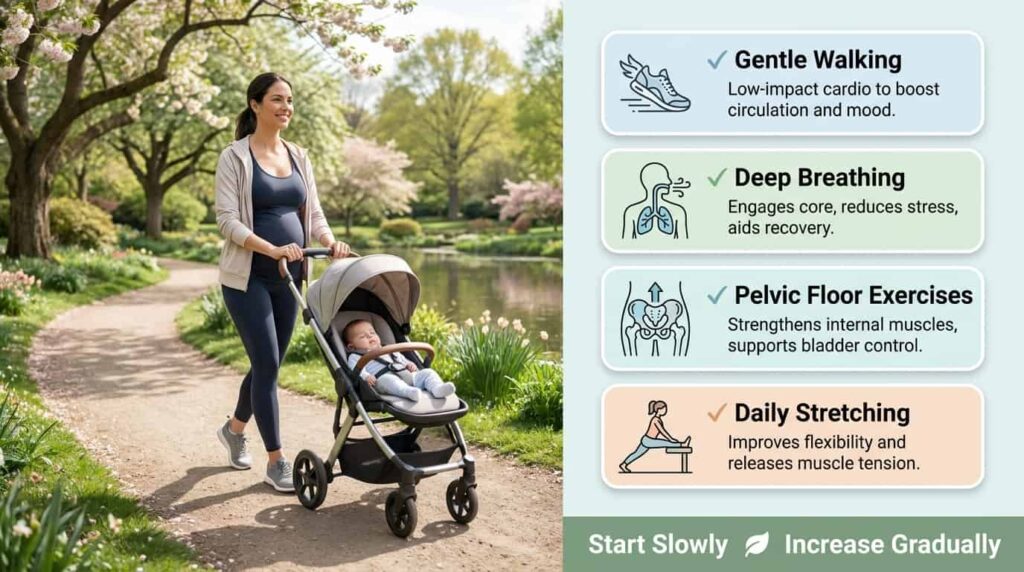
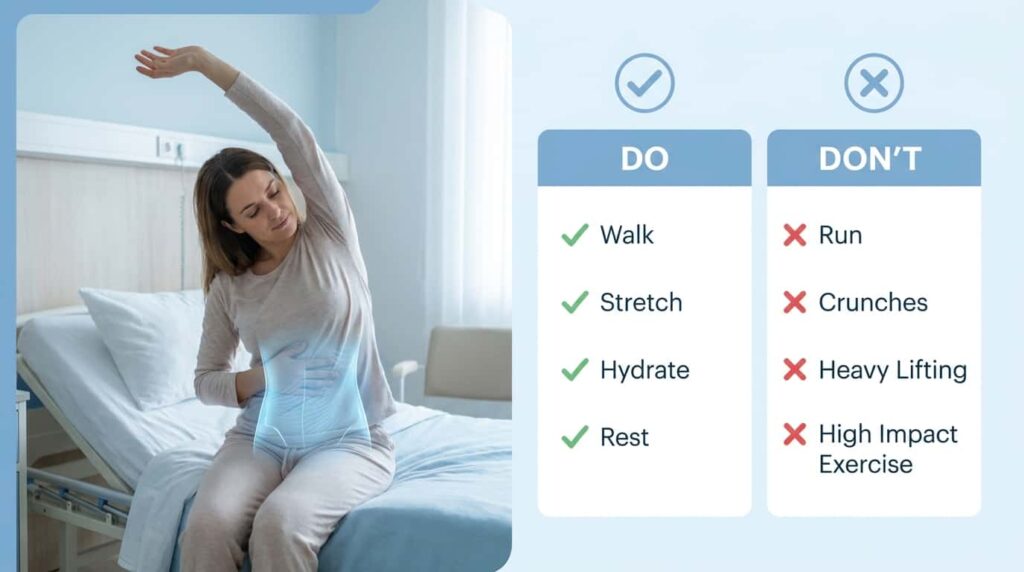
For many women, gentle walking is one of the first activities recommended after delivery, provided it feels comfortable and your healthcare provider agrees.
Walking helps improve circulation, reduce stiffness, and gradually rebuild endurance without placing too much stress on your recovering body.
Gentle Activities You Can Start With
Many women begin with:
- Short walks
- Deep breathing exercises
- Gentle stretching
- Good posture exercises
- Pelvic floor exercises if recommended
These activities encourage movement while allowing your body to continue healing.
Activities You Should Avoid
Even if you feel energetic, avoid returning to intense exercise too soon.
Delay activities such as:
- Running
- Jumping
- Heavy lifting
- High-impact workouts
- Intense abdominal exercises
- Competitive sports
Healing takes time, even if you feel well.
Starting slowly now helps build a stronger foundation for long-term postpartum fitness.
When Can You Exercise After Birth After a C-Section?
If you had a C-section, the answer to when can you exercise after birth is usually different than it is after a vaginal birth.
A C-section is a major abdominal surgery. Although your incision may begin healing within the first few weeks, the muscles, tissues, and fascia underneath need much longer to recover.
This is why it’s important not to rush back into workouts.
Your body needs time to heal properly before you begin strength training or high-impact exercise.
What Can You Do During Early Recovery?
Many healthcare providers encourage gentle movement as soon as it’s safe because light activity may help support recovery.
Examples include:
- Walking around your room or home
- Deep breathing exercises
- Gentle posture exercises
- Standing up and sitting down slowly
- Light stretching after medical approval
These simple activities may help:
- Improve blood circulation
- Reduce stiffness
- Lower the risk of blood clots
- Improve energy levels
- Support overall recovery
Start with just a few minutes each day and increase your activity only if your body feels comfortable.
Exercises to Avoid After a C-Section
During the first stage of recovery, avoid exercises that place too much pressure on your abdominal muscles.
These include:
- Running
- Jumping
- Heavy lifting
- Crunches
- Sit-ups
- Planks
- Burpees
- High-impact cardio
- Intense core workouts
Waiting until your healthcare provider clears you for these activities can help reduce the risk of injury and support proper healing.
Signs You’re Healing Well
As your body recovers, you may notice:
- Less pain around your incision
- Easier movement
- Better posture
- Increased walking distance
- More energy during the day
- Less discomfort while lifting your baby
These are positive signs that your recovery is progressing.
FitMomWay Tip
If you had a C-section, don’t measure your recovery by how quickly you return to the gym. Measure it by how much stronger and more comfortable you feel each week.
Why Doctor Approval Matters Before You Exercise After Birth
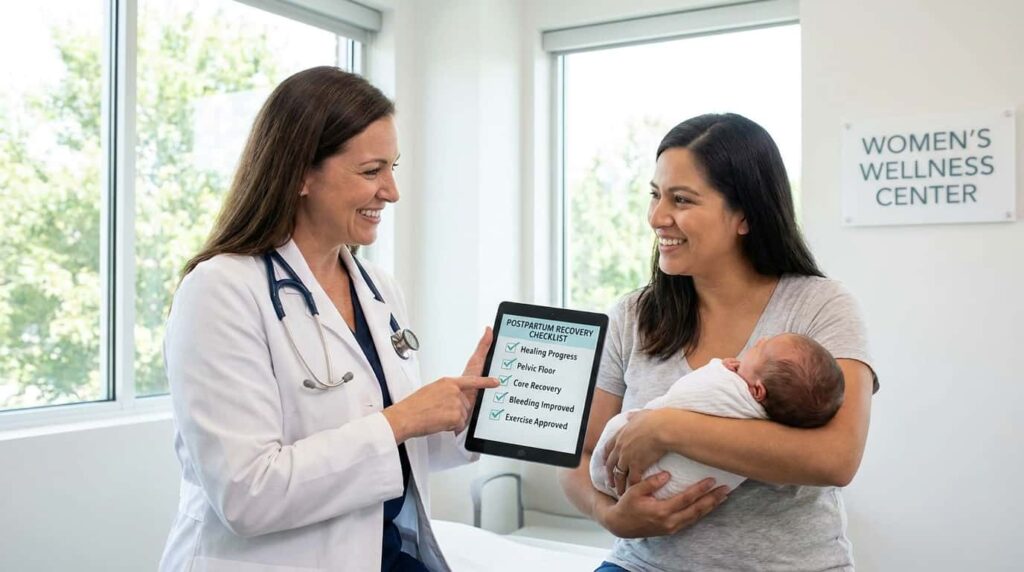
Many moms search online to learn when can you exercise after birth, but your healthcare provider should always have the final say.
Every pregnancy and delivery is unique.
Even if two women had the same type of birth, their recovery may be completely different.
That’s why medical clearance is one of the most important steps before starting postpartum exercise.
What Happens During Your Postpartum Checkup?
During your postpartum appointment, your healthcare provider may check:
- Your overall healing
- Vaginal or C-section recovery
- Blood pressure
- Pelvic floor recovery
- Bleeding
- Pain levels
- Emotional well-being
- Signs of infection
Based on your recovery, they can recommend whether you’re ready to increase your activity level.
Questions to Ask Your Healthcare Provider
Before starting a workout routine, consider asking:
- When can I exercise after birth based on my recovery?
- Is walking enough right now?
- Can I begin strength training?
- Should I avoid certain exercises?
- Are my pelvic floor muscles healing well?
- When can I return to my normal workouts?
These questions can help you create a safe fitness plan.
Warning Signs to Stop Exercising After Birth
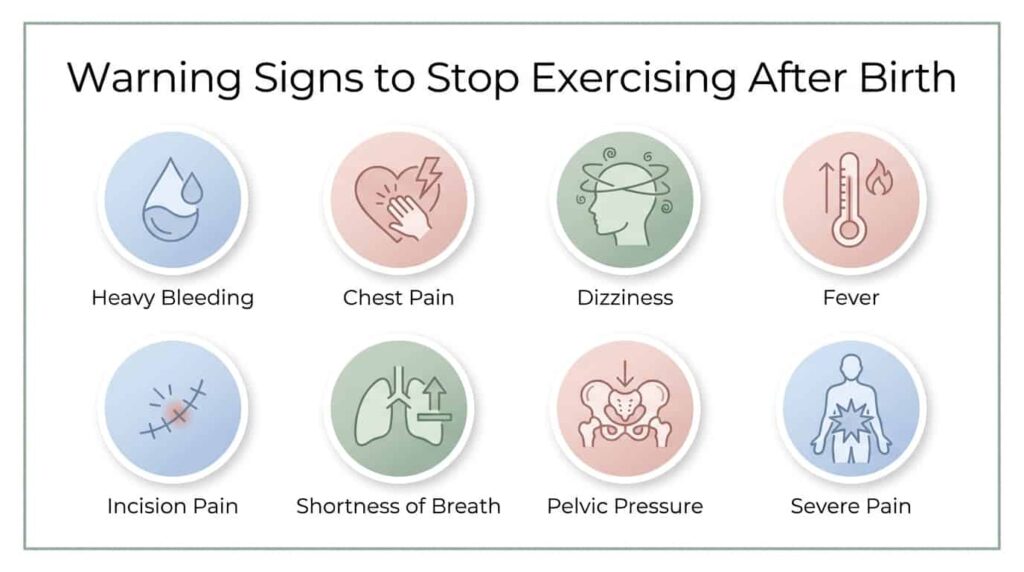
Knowing when can you exercise after birth also means knowing when you should stop.
If you experience any of the following symptoms during or after exercise, stop immediately and contact your healthcare provider.
Heavy Bleeding
If your bleeding becomes heavier after exercising instead of gradually improving, your body may need more time to recover.
Severe Pain
Mild muscle soreness can be normal.
Sharp pain, severe abdominal pain, or increasing pelvic pain is not.
Dizziness
Feeling faint or dizzy during exercise should never be ignored.
Stop immediately and rest.
Chest Pain or Difficulty Breathing
Seek medical attention right away if you experience chest pain or trouble breathing.
Increased Incision Pain
If you’ve had a C-section, increasing pain, redness, swelling, or fluid around your incision should be evaluated by your healthcare provider.
Fever
A fever may be a sign of infection and requires medical attention.
Pelvic Pressure
If you feel heaviness or pressure in your pelvic area during exercise, stop and speak with your healthcare provider or pelvic floor physical therapist.
FitMomWay Tip
Your body gives you valuable feedback during recovery. Never ignore symptoms that feel unusual or get worse with exercise.
Best Exercises to Start After Birth
Once you’ve received medical clearance, begin with simple, low-impact exercises.
The goal isn’t to burn calories.
The goal is to rebuild strength safely.
Walking
Walking is one of the best ways to begin postpartum fitness.
Benefits include:
- Improves circulation
- Builds endurance
- Increases energy
- Supports recovery
- Helps improve mood
Start with short walks and gradually increase your distance each week.
Pelvic Floor Exercises
Pregnancy and childbirth place extra stress on the pelvic floor.
Strengthening these muscles may help improve bladder control, support your core, and aid recovery.
Practice them consistently using the technique recommended by your healthcare provider.
Deep Breathing Exercises
Deep breathing helps activate your deep core muscles while encouraging relaxation.
Practice slow, controlled breathing for several minutes each day.
Gentle Stretching
Stretching can reduce tightness caused by feeding, carrying, and lifting your baby.
Focus on stretching your:
- Neck
- Shoulders
- Upper back
- Hips
- Hamstrings
Move slowly and never stretch to the point of pain.
Beginner Strength Exercises
As your recovery progresses, you may gradually add:
- Wall push-ups
- Bodyweight squats
- Glute bridges
- Bird dogs
- Heel raises
Start with one or two sets and prioritize proper form over repetitions.
Common Mistakes New Moms Make When Returning to Exercise
Knowing when can you exercise after birth is important, but avoiding common mistakes is just as important.
Many new moms are excited to become active again, yet returning to exercise too quickly or choosing the wrong workouts can slow recovery.
Here are some of the most common mistakes to avoid.
Returning to Exercise Too Soon
One of the biggest mistakes is assuming that feeling better means your body has fully healed.
Even if your pain has decreased, your muscles, pelvic floor, and connective tissues may still be recovering.
Always increase your activity gradually and follow your healthcare provider’s recommendations.
Ignoring Your Body’s Signals
Your body will tell you if you’re doing too much.
Signs that you should slow down include:
- Increased bleeding
- Pelvic pain
- Severe fatigue
- Dizziness
- Incision discomfort
- Urine leakage during exercise
Never ignore these symptoms.
Skipping Warm-Ups
Many new moms are short on time and jump straight into exercise.
However, spending five to ten minutes warming up helps prepare your muscles and joints for movement.
Simple warm-up ideas include:
- Walking in place
- Shoulder rolls
- Gentle stretching
- Deep breathing
Focusing Only on Weight Loss
It’s understandable to want to lose baby weight, but postpartum fitness is about much more than the number on the scale.
Instead, focus on:
- Rebuilding strength
- Improving mobility
- Supporting your pelvic floor
- Increasing your energy
- Creating healthy habits
Weight loss can happen naturally as your recovery progresses.
Comparing Yourself to Other Moms
Every pregnancy, birth, and recovery is different.
Some women recover quickly, while others need several months before they feel comfortable exercising regularly.
Avoid comparing yourself to social media or other moms.
Your recovery timeline is unique.
FitMomWay Tip
Recovery isn’t about how fast you bounce back. It’s about building a healthy body that will support you for years to come.
Sample Beginner Postpartum Exercise Plan
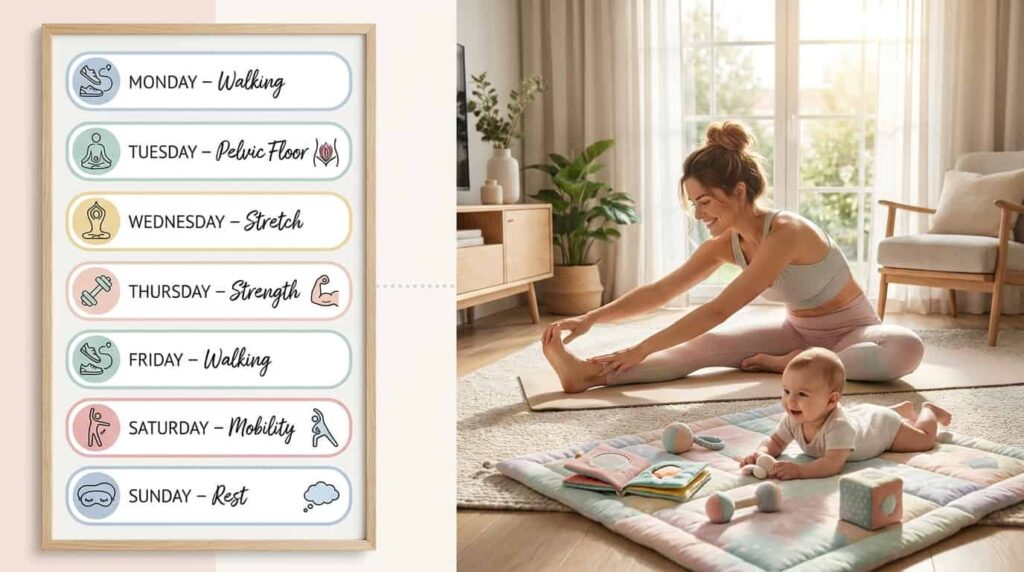
If you’ve received approval from your healthcare provider and are wondering when can you exercise after birth, this simple weekly routine can help you ease back into movement.
Monday
- 15–20 minute walk
- Deep breathing exercises
- Gentle stretching
Tuesday
- Pelvic floor exercises
- Wall push-ups
- Shoulder rolls
Wednesday
- Rest or light walking
Thursday
- Bodyweight squats
- Glute bridges
- Bird dog exercise
Friday
- 20–30 minute walk
- Gentle stretching
Saturday
- Mobility exercises
- Deep breathing
- Full-body stretching
Sunday
- Recovery day
- Short walk if you feel comfortable
The goal is consistency, not intensity.
As your body becomes stronger, you can gradually increase your workout duration and difficulty.
Frequently Asked Questions
When can you exercise after birth if you had a vaginal delivery?
Many women can begin gentle walking soon after an uncomplicated vaginal birth if approved by their healthcare provider. More structured workouts usually begin after medical clearance.
When can you exercise after birth after a C-section?
Recovery after a C-section usually takes longer because it is major abdominal surgery. Your healthcare provider will advise you when it’s safe to begin structured exercise.
Is walking enough after giving birth?
Yes. Walking is one of the safest and most effective ways to begin postpartum fitness. It helps improve circulation, endurance, and energy while supporting recovery.
Can I lift weights after having a baby?
Yes, but only after your healthcare provider confirms that your body is ready. Start with light resistance and proper technique.
Can I do abdominal exercises after birth?
Intense abdominal exercises should be avoided until your core has healed and your healthcare provider says it’s appropriate. Begin with gentle core rehabilitation exercises instead.
How often should I exercise after giving birth?
Start with short sessions several days each week and gradually increase your activity as your recovery progresses.
What if I feel pain during exercise?
Stop immediately if you experience pain, heavy bleeding, dizziness, chest pain, or any unusual symptoms, and contact your healthcare provider.
Can exercise affect breastfeeding?
Moderate exercise is generally considered compatible with breastfeeding. Staying hydrated and eating enough nutritious food can help support recovery and milk production.
How long does postpartum recovery usually take?
Many women experience major improvements during the first six weeks, but full recovery may continue for several months.
When can you exercise after birth safely?
The safest answer is: when can you exercise after birth depends on your recovery, your type of delivery, and your healthcare provider’s advice. Returning to exercise gradually helps reduce the risk of injury and supports long-term health.
Conclusion
If you’ve been wondering when can you exercise after birth, the answer depends on your body’s recovery rather than a specific date on the calendar.
Some women feel ready for gentle movement within days, while others need more time before returning to structured exercise.
Whether you had a vaginal birth or a C-section, your priority should always be healing first and fitness second.
Start with walking, gentle stretching, and pelvic floor exercises once your healthcare provider approves. As your strength and confidence grow, you can gradually return to more challenging workouts.
Remember that postpartum recovery is a journey.
Small, consistent steps will help you build lasting strength, improve your energy, and support your long-term health.
Disclaimer
FitMomWay provides educational information only and does not offer medical advice, diagnosis, or treatment.
Always consult your healthcare provider before starting any postpartum fitness, nutrition, or exercise program. Stop exercising and seek medical advice if you experience pain, heavy bleeding, dizziness, chest pain, or any unusual symptoms.


[…] is the foundation of every pelvic floor exercises pregnancy […]
[…] proper warm-up prepares your muscles, increases blood flow, and helps reduce the risk of […]