
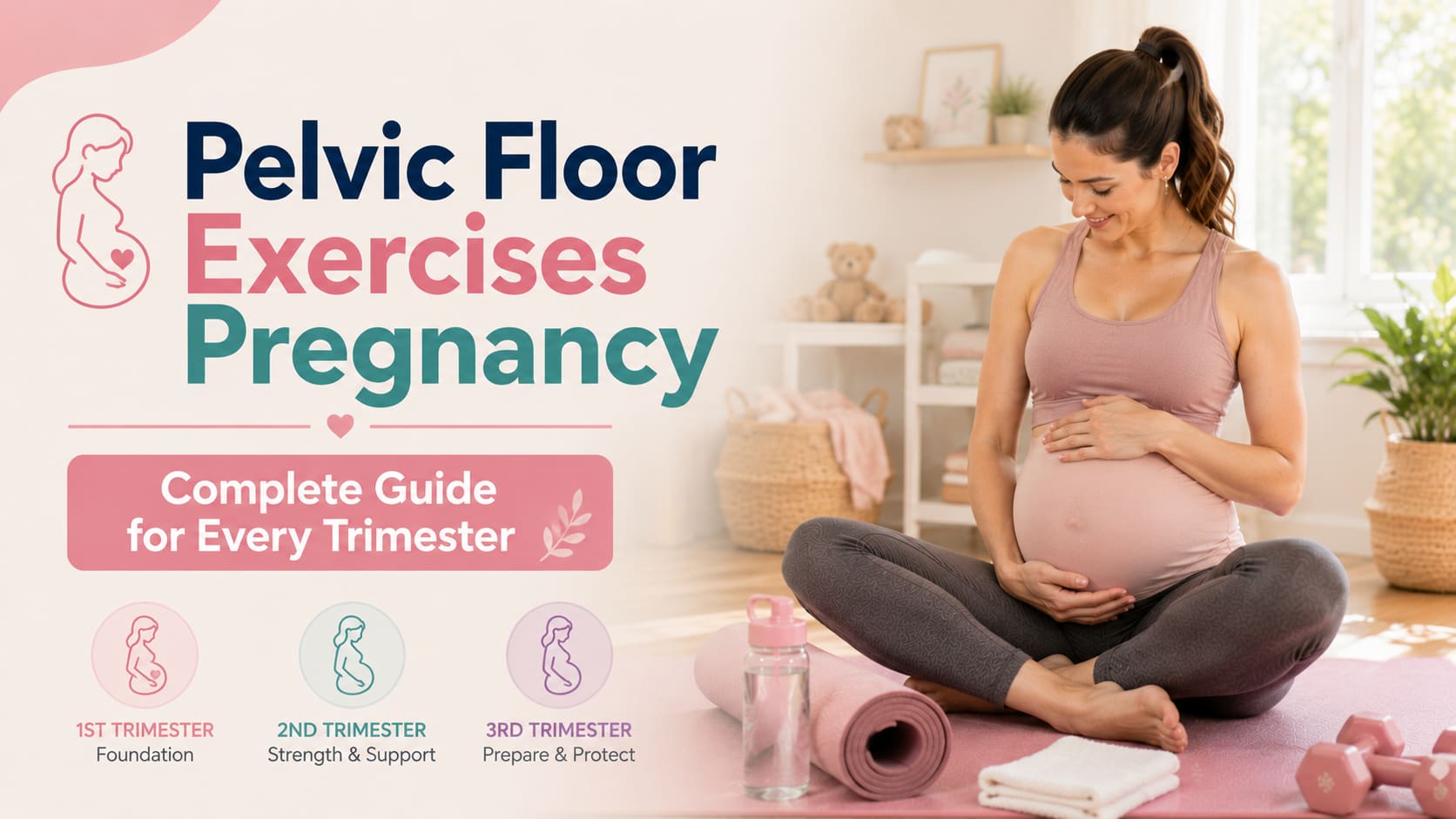
If you’re searching for pelvic floor exercises pregnancy, you’re taking an important step toward supporting your body during pregnancy and preparing for childbirth.
As your baby grows, your pelvic floor muscles work harder every day. They support your uterus, bladder, and bowel while carrying the extra weight of your pregnancy. Without proper care, these muscles can become weaker, which may lead to bladder leaks, pelvic discomfort, lower back pain, or reduced core stability.
The good news is that pelvic floor exercises pregnancy are simple, safe for most healthy pregnancies, and only take a few minutes each day.
You don’t need a gym membership or expensive equipment. These exercises can be done at home, at work, or even while sitting on the couch.
Adding pelvic floor exercises pregnancy to your daily routine may help improve bladder control, strengthen your core, prepare your body for labor, and support a smoother postpartum recovery.
In this complete guide, you’ll learn exactly how to perform pelvic floor exercises correctly, understand their benefits during every trimester, discover common mistakes to avoid, and build a simple daily routine that fits into your pregnancy.
Quick Answer
Pelvic floor exercises pregnancy are gentle muscle-strengthening exercises that target the muscles supporting your bladder, uterus, and bowel. Practicing pelvic floor exercises pregnancy regularly may improve bladder control, increase pelvic stability, prepare your body for labor, and support postpartum recovery. Most healthy pregnant women can safely perform these exercises after approval from their healthcare provider.
Table of Contents
What Are Pelvic Floor Exercises Pregnancy?
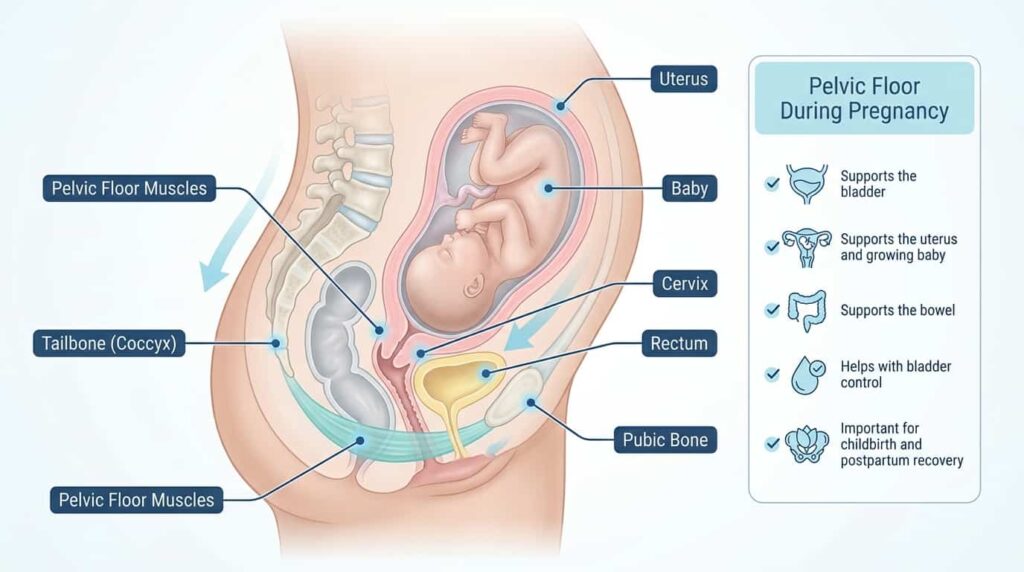
Before learning how to perform pelvic floor exercises pregnancy, it’s important to understand what your pelvic floor actually is.
Your pelvic floor is a group of muscles that stretches across the bottom of your pelvis like a hammock.
These muscles support several important organs, including your:
- Bladder
- Uterus
- Bowel
During pregnancy, your pelvic floor supports not only these organs but also your growing baby.
As your pregnancy progresses, the additional weight places more pressure on these muscles.
Hormonal changes also make your ligaments and connective tissues more flexible, which is necessary for childbirth but can reduce stability around your pelvis.
This is one reason why many healthcare professionals recommend pelvic floor exercises pregnancy as part of a healthy prenatal fitness routine.
What Happens If Your Pelvic Floor Becomes Weak?
Weak pelvic floor muscles may contribute to:
- Urine leakage when coughing or sneezing
- Pelvic heaviness
- Reduced core strength
- Poor posture
- Lower back discomfort
- Difficulty supporting your growing baby
Strengthening these muscles before childbirth can help your body better manage these physical changes.
FitMomWay Tip
Think of your pelvic floor as the foundation of your core. Just as you strengthen your legs or arms, your pelvic floor also benefits from regular, gentle exercise.
Why Pelvic Floor Exercises Pregnancy Matter
Many pregnant women focus on walking, yoga, or strength training, but they often forget about the muscles they can’t see.
Your pelvic floor is one of the hardest-working muscle groups during pregnancy.
As your baby grows, these muscles support increasing weight every single day.
Practicing pelvic floor exercises pregnancy helps keep these muscles strong and coordinated throughout your pregnancy.
Strong pelvic floor muscles don’t just support your baby.
They also work together with your:
- Deep abdominal muscles
- Lower back muscles
- Diaphragm
- Hip muscles
Together, these muscles form your body’s natural support system.
When one part becomes weak, the others often work harder to compensate.
By including pelvic floor exercises pregnancy in your routine, you’re strengthening an important part of your entire core.
Benefits of Pelvic Floor Exercises Pregnancy
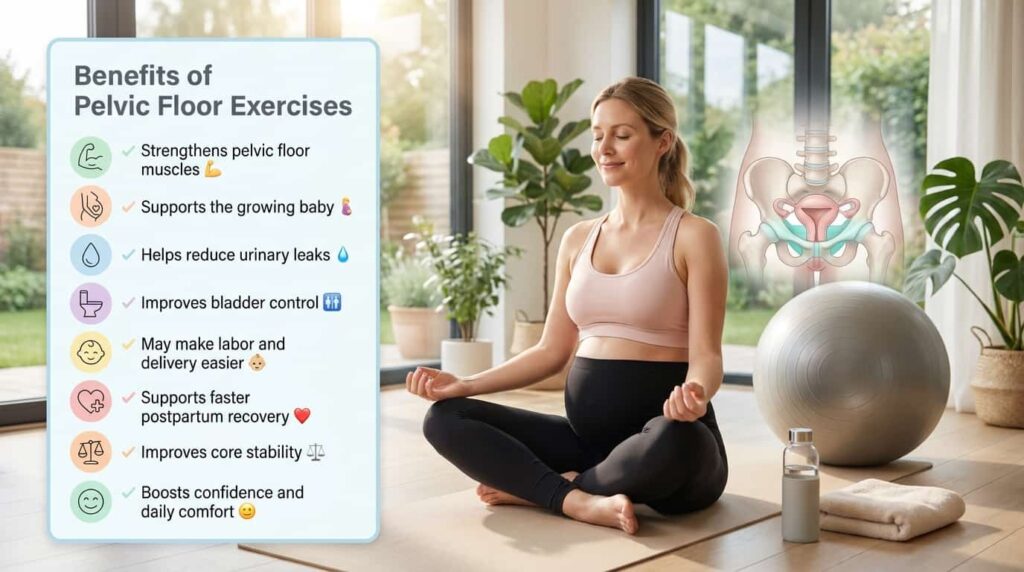
There are many reasons healthcare professionals recommend pelvic floor exercises pregnancy throughout all three trimesters.
1. Better Bladder Control
Many pregnant women notice small urine leaks while:
- Sneezing
- Laughing
- Coughing
- Jumping
- Lifting
Strengthening your pelvic floor muscles may help improve bladder support and reduce leakage.
2. Better Support for Your Growing Baby
Your pelvic floor supports your uterus throughout pregnancy.
As your baby grows, stronger muscles provide better support for your pelvis.
3. Improved Core Stability
Your pelvic floor is an important part of your deep core.
Strengthening it may improve:
- Balance
- Stability
- Posture
- Everyday movement
4. Preparation for Labor
Labor requires both strength and relaxation.
Learning how to contract and completely relax your pelvic floor muscles during pregnancy helps improve body awareness before childbirth.
5. Easier Postpartum Recovery
Women who consistently practice pelvic floor exercises pregnancy often begin postpartum recovery with stronger pelvic muscles.
Although every recovery is different, maintaining pelvic floor health before birth creates a solid foundation for rebuilding strength afterward.
6. Greater Confidence During Pregnancy
Knowing you’re actively preparing your body for childbirth can increase confidence throughout pregnancy.
Small daily habits often create meaningful long-term results.
FitMomWay Tip
Five minutes of pelvic floor exercises pregnancy every day is usually more beneficial than doing one long session each week.
Who Should Do Pelvic Floor Exercises Pregnancy?
For most healthy pregnancies, pelvic floor exercises pregnancy are recommended because these muscles support your body throughout every stage of pregnancy.
You may especially benefit if you:
- Are pregnant with your first baby
- Have had previous pregnancies
- Notice urine leakage
- Experience pelvic pressure
- Plan to stay active throughout pregnancy
- Want to prepare your body for labor
- Want to support postpartum recovery
Even if you don’t currently have symptoms, strengthening your pelvic floor before problems develop is a smart long-term investment in your health.
When Should You Start Pelvic Floor Exercises Pregnancy?
One of the most common questions new moms ask is when they should begin pelvic floor exercises pregnancy.
For most healthy pregnancies, you can usually begin as soon as your healthcare provider confirms that exercise is appropriate.
Starting early gives you more time to:
- Learn proper technique
- Build muscle awareness
- Create a consistent routine
- Prepare for later stages of pregnancy
You don’t need long workouts.
Even spending five to ten minutes each day practicing pelvic floor exercises pregnancy can become part of a healthy prenatal fitness routine.
Safety Tips Before Starting Pelvic Floor Exercises Pregnancy
Although pelvic floor exercises pregnancy are gentle, following proper technique is important.
Before you begin, remember these simple safety tips.
Get Medical Clearance
Always speak with your healthcare provider before starting a new pregnancy exercise program, especially if you have a high-risk pregnancy or medical complications.
Breathe Normally
Avoid holding your breath while performing pelvic floor contractions.
Slow, natural breathing helps your muscles work more effectively.
Don’t Squeeze Too Hard
A gentle contraction is more effective than squeezing with maximum effort.
Focus on control instead of force.
Keep Other Muscles Relaxed
Avoid tightening your:
- Buttocks
- Thighs
- Shoulders
- Neck
Only your pelvic floor muscles should be working.
Stop If You Feel Pain
Pelvic floor exercises should never cause pain.
If you experience pain, dizziness, bleeding, contractions, or any unusual symptoms, stop exercising and contact your healthcare provider.
FitMomWay Tip
The quality of each repetition matters much more than the quantity. Learning the correct technique now will make every future exercise session more effective.
How to Find the Correct Pelvic Floor Muscles
Before you begin pelvic floor exercises pregnancy, you need to learn how to activate the correct muscles.
Many pregnant women accidentally tighten their stomach, thighs, or buttocks instead of their pelvic floor.
Finding the correct muscles is the most important step because good technique leads to better results.
Method 1: Imagine Stopping the Flow of Urine
One way to identify your pelvic floor muscles is to imagine you’re trying to stop the flow of urine.
This is only for learning which muscles to contract.
Do not regularly stop your urine while using the bathroom, as this is not recommended as an exercise.
Method 2: Imagine Holding in Gas
Another simple method is to imagine you’re gently trying to stop yourself from passing gas.
You should feel a gentle lifting sensation inside your pelvis.
Try to keep your:
- Legs relaxed
- Buttocks relaxed
- Stomach relaxed
- Shoulders relaxed
Only the pelvic floor muscles should be working.
Signs You’re Using the Right Muscles
You may notice:
- A gentle lifting feeling inside the pelvis
- Normal breathing
- Relaxed hips and thighs
- No squeezing of your buttocks
FitMomWay Tip
Don’t worry if you can’t find the muscles immediately. Most women need several practice sessions before they become comfortable with pelvic floor exercises pregnancy.
How to Perform Pelvic Floor Exercises Pregnancy
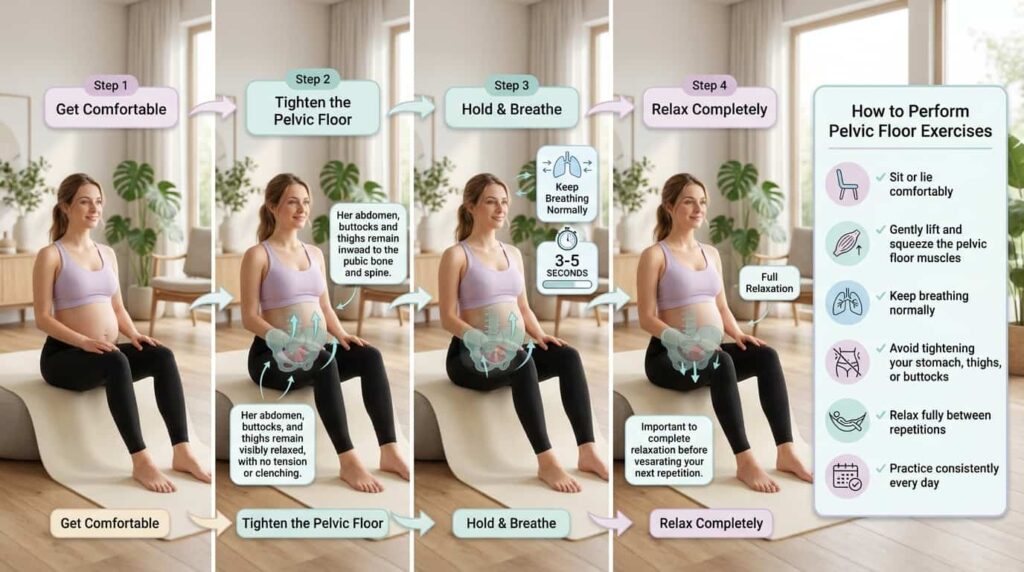
Now that you’ve identified the correct muscles, it’s time to learn how to perform pelvic floor exercises pregnancy safely.
Start slowly and focus on proper technique.
Quality is much more important than speed.
Exercise 1: Slow Pelvic Floor Contractions (Kegels)
This is the foundation of every pelvic floor exercises pregnancy routine.
Steps
- Sit comfortably on a chair or exercise ball.
- Relax your shoulders.
- Take a slow breath in.
- As you breathe out, gently tighten and lift your pelvic floor muscles.
- Hold for 3–5 seconds.
- Continue breathing normally.
- Slowly release completely.
- Rest for 5 seconds.
- Repeat 10 times.
Beginner Goal
- 10 repetitions
- 1–2 sets
- Once or twice daily
As your muscles become stronger, gradually increase your hold to 8–10 seconds.
Benefits
- Improves bladder control
- Builds pelvic strength
- Supports your growing baby
- Improves muscle awareness
Exercise 2: Quick Pelvic Floor Contractions
Your pelvic floor also needs to react quickly when you cough, laugh, sneeze, or lift your baby after birth.
Quick contractions help train these fast-response muscles.
Steps
- Sit comfortably.
- Tighten your pelvic floor muscles.
- Hold for 1 second.
- Relax completely.
- Repeat 10–15 repetitions.
This exercise takes less than a minute but can be very effective when added to your pelvic floor exercises pregnancy routine.
Exercise 3: Seated Pelvic Floor Lift
This beginner-friendly exercise improves coordination.
Steps
- Sit with both feet flat on the floor.
- Keep your back straight.
- Breathe in slowly.
- As you breathe out, gently lift your pelvic floor muscles upward.
- Hold for 5 seconds.
- Slowly relax.
- Repeat 10 times.
Benefits
- Easy for beginners
- Can be done anywhere
- Improves daily muscle awareness
Exercise 4: Pelvic Tilts
Pelvic tilts gently strengthen your lower back, abdominal muscles, and pelvic floor together.
Steps
- Stand against a wall or get onto your hands and knees.
- Tighten your pelvic floor gently.
- Tilt your pelvis slightly.
- Hold for 3 seconds.
- Return slowly.
- Repeat 10–12 repetitions.
Benefits
- Supports your lower back
- Improves posture
- Builds core stability
- Reduces pelvic stiffness
Exercise 5: Deep Diaphragmatic Breathing
Your diaphragm and pelvic floor work together.
Proper breathing improves the effectiveness of pelvic floor exercises pregnancy.
Steps
- Sit comfortably.
- Place one hand on your ribs.
- Inhale slowly through your nose.
- Allow your ribs to expand naturally.
- Exhale slowly through your mouth.
- Gently lift your pelvic floor during the exhale.
- Completely relax while breathing in.
Practice for 3–5 minutes.
Benefits
- Improves breathing
- Encourages muscle relaxation
- Reduces tension
- Supports core function
FitMomWay Tip
Think:
Breathe → Lift → Hold → Relax
Never hold your breath while doing pelvic floor exercises pregnancy.
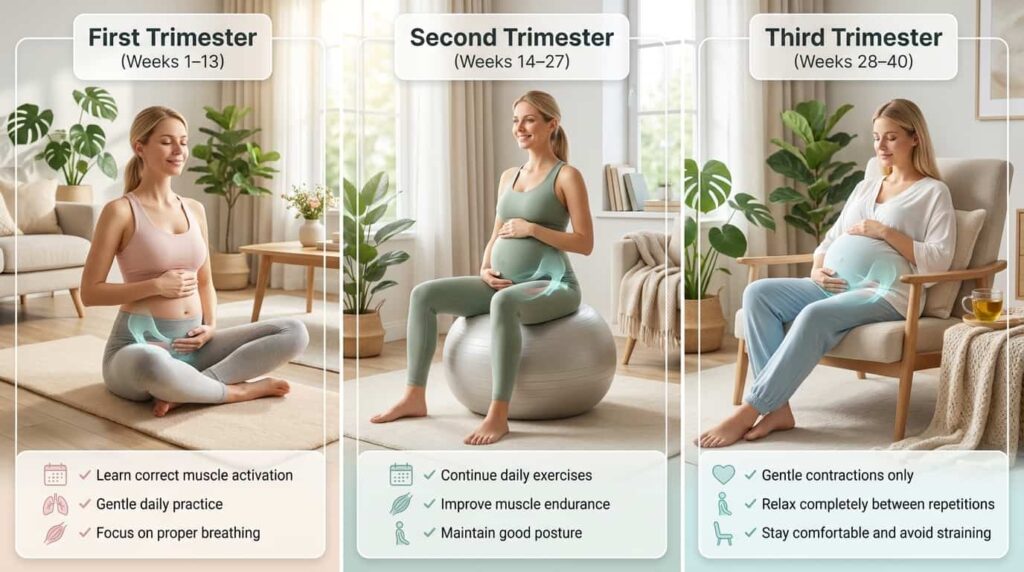
Pelvic Floor Exercises Pregnancy by Trimester
Your body changes throughout pregnancy, so your exercise routine should also change.
First Trimester
During the first trimester, focus on learning the correct technique.
Goals
- Build a daily habit
- Learn proper breathing
- Improve muscle awareness
- Practice gentle contractions
Recommended Exercises
- Slow contractions
- Quick contractions
- Deep breathing
- Seated pelvic floor lifts
This is the perfect time to develop confidence with pelvic floor exercises pregnancy.
Second Trimester
As your baby grows, your pelvic floor begins supporting more weight.
Continue strengthening your muscles while paying attention to posture.
Goals
- Maintain strength
- Improve posture
- Support your growing baby
- Stay active
Recommended Exercises
- Standing contractions
- Pelvic tilts
- Walking
- Deep breathing
- Slow contractions
Many women find the second trimester the most comfortable time to stay active.
Third Trimester
During the third trimester, your pelvic floor supports the greatest amount of weight.
Instead of increasing intensity, focus on consistency and relaxation.
Goals
- Maintain strength
- Improve flexibility
- Practice relaxation
- Prepare for labor
Recommended Exercises
- Gentle pelvic floor contractions
- Deep breathing
- Pelvic relaxation
- Comfortable walking
- Pregnancy stretching
Learning to completely relax your pelvic floor is just as important as strengthening it before labor.
FitMomWay Tip
Healthy pelvic floor muscles know when to tighten and when to relax. Practicing both throughout pregnancy helps prepare your body for childbirth.
How Often Should You Do Pelvic Floor Exercises Pregnancy?
One of the biggest questions moms ask is:
How often should I do pelvic floor exercises pregnancy?
For most healthy pregnancies, consistency is more important than doing long workouts.
A simple routine could look like this:
Morning
- 10 slow contractions
- 10 quick contractions
Afternoon
- 10 seated contractions
- 5 minutes of walking
Evening
- Deep breathing
- 10 slow contractions
- Gentle stretching
This entire routine takes about 10–15 minutes each day but can become an important part of your pregnancy fitness routine.
FitMomWay Tip
Set a daily reminder on your phone or pair your pelvic floor exercises pregnancy routine with an existing habit, such as brushing your teeth or eating breakfast. This makes it much easier to stay consistent.
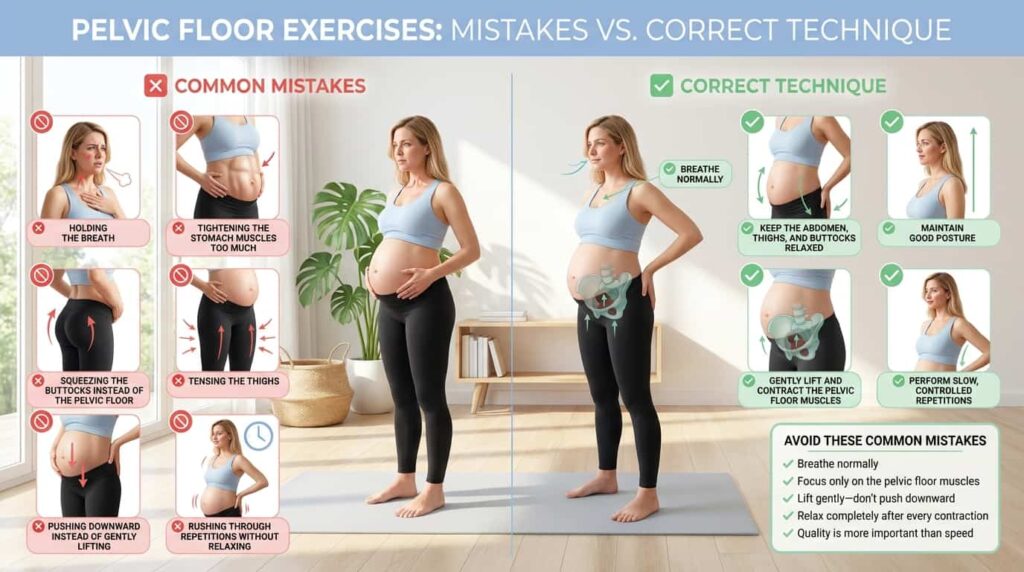
Common Mistakes to Avoid During Pelvic Floor Exercises Pregnancy
Even though pelvic floor exercises pregnancy are simple, many women unknowingly make mistakes that reduce their effectiveness.
By avoiding these common errors, you’ll get better results while helping protect your body throughout pregnancy.
Holding Your Breath
One of the biggest mistakes during pelvic floor exercises pregnancy is holding your breath while squeezing your muscles.
Instead:
- Inhale slowly through your nose.
- Exhale gently while lifting your pelvic floor.
- Continue breathing normally throughout each repetition.
Proper breathing helps your pelvic floor and deep core muscles work together.
Squeezing Too Hard
Many women believe stronger contractions produce faster results.
However, using too much force can create unnecessary muscle tension.
Instead:
- Use gentle contractions.
- Focus on lifting rather than squeezing.
- Relax completely after each repetition.
Quality always beats intensity.
Using the Wrong Muscles
Your pelvic floor should do most of the work.
Avoid tightening your:
- Buttocks
- Thighs
- Stomach
- Shoulders
If these muscles become tired before your pelvic floor, reset and practice again.
Forgetting to Relax
Healthy pelvic floor muscles should both contract and relax.
Learning to relax these muscles is just as important as strengthening them because your pelvic floor needs to lengthen during childbirth.
Practice relaxing completely after every contraction.
Being Inconsistent
Many women perform pelvic floor exercises pregnancy for a few days and then forget about them.
The best results come from making these exercises a daily habit.
Even five minutes each day is better than one long session every week.
FitMomWay Tip
Attach your pelvic floor exercises pregnancy routine to a daily habit like brushing your teeth, eating breakfast, or going to bed. Habit stacking makes consistency much easier.
Signs You’re Making Progress
Pelvic floor muscles become stronger gradually.
Many women notice improvements after several weeks of consistent practice.
You may notice:
- Better bladder control
- Less urine leakage when coughing or sneezing
- Improved posture
- Better balance
- Increased core stability
- Less pelvic heaviness
- Greater body awareness
- More confidence during pregnancy
Don’t expect overnight results.
Like any muscle, your pelvic floor becomes stronger with regular training.
When Should You Stop Pelvic Floor Exercises Pregnancy?
Although pelvic floor exercises pregnancy are safe for most healthy pregnancies, there are situations where you should stop exercising and contact your healthcare provider.
Stop immediately if you experience:
- Vaginal bleeding
- Severe pelvic pain
- Fluid leaking from the vagina
- Regular contractions before full term
- Chest pain
- Dizziness
- Difficulty breathing
- Sudden swelling
- Severe headache
- Any unusual symptoms during exercise
Always follow your healthcare provider’s advice if you have a high-risk pregnancy or pregnancy complications.
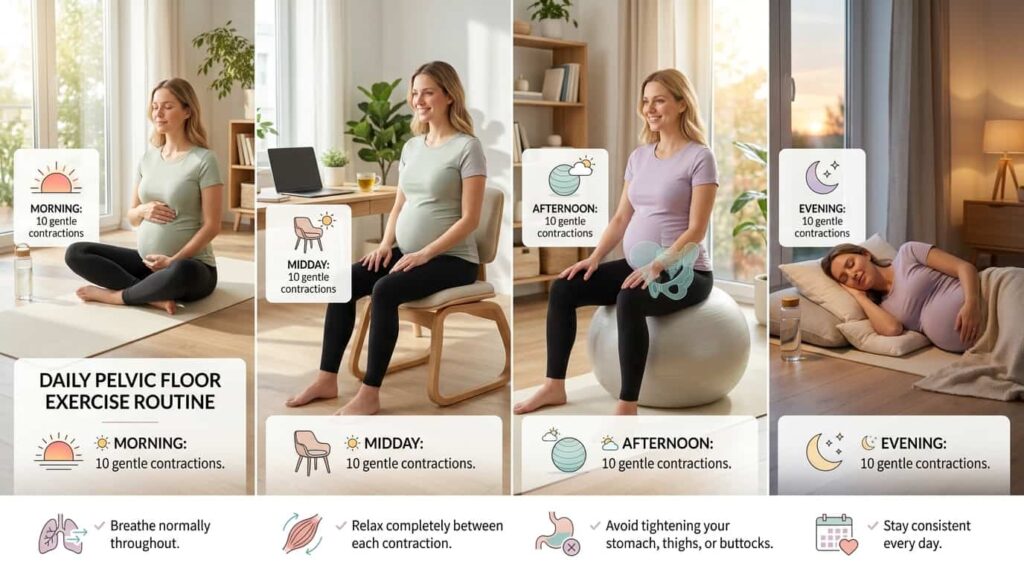
Sample Daily Pelvic Floor Exercises Pregnancy Routine
If you’re unsure where to begin, here’s a beginner-friendly daily routine.
Morning Routine
- 10 slow pelvic floor contractions
- 10 quick contractions
- 2 minutes of deep breathing
Total time: 5 minutes
Afternoon Routine
- 10 seated contractions
- Pelvic tilts
- 10–15 minute walk
Total time: 10 minutes
Evening Routine
- 10 slow contractions
- Gentle pregnancy stretching
- Deep breathing before bed
Total time: 5–10 minutes
This simple routine takes less than 20 minutes a day and can easily fit into most schedules.
Pregnancy Fitness Tips to Support Your Pelvic Floor
Your pelvic floor doesn’t work alone.
Healthy daily habits also support these important muscles.
Stay Active
Regular pregnancy-safe activities such as:
- Walking
- Swimming
- Prenatal yoga
- Light strength training
can complement pelvic floor exercises pregnancy.
Maintain Good Posture
Good posture reduces unnecessary pressure on your lower back and pelvis.
Try to:
- Stand tall
- Relax your shoulders
- Keep your spine neutral
- Avoid locking your knees
Stay Hydrated
Proper hydration supports healthy muscles and bladder function.
Drink water consistently throughout the day unless your healthcare provider advises otherwise.
Eat Fiber-Rich Foods
Constipation places extra strain on your pelvic floor.
Include foods such as:
- Fruits
- Vegetables
- Whole grains
- Beans
- Oats
to help support healthy digestion.
Avoid Heavy Lifting
Whenever possible, avoid lifting heavy objects during pregnancy.
If you must lift something, bend your knees and use proper lifting technique.
FitMomWay Tip
Think of pelvic floor exercises pregnancy as one part of a complete pregnancy fitness plan that also includes healthy eating, walking, stretching, hydration, and good sleep.
Frequently Asked Questions
What are pelvic floor exercises pregnancy?
Pelvic floor exercises pregnancy are gentle exercises that strengthen the muscles supporting your bladder, uterus, and bowel during pregnancy. They may help improve bladder control, prepare your body for labor, and support postpartum recovery.
Are pelvic floor exercises pregnancy safe every day?
Yes.
For most healthy pregnancies, pelvic floor exercises pregnancy can be performed daily after approval from your healthcare provider.
Daily practice is usually more effective than occasional long sessions.
When should I start pelvic floor exercises pregnancy?
Most women can begin during the first trimester after their healthcare provider confirms it’s safe.
Starting early helps build strength before your baby places more pressure on your pelvic floor.
Can pelvic floor exercises pregnancy help stop bladder leaks?
They may help strengthen the muscles supporting your bladder, which can reduce urine leakage during pregnancy and after childbirth.
How many pelvic floor exercises pregnancy should I do each day?
A beginner routine usually includes:
- 10 slow contractions
- 10 quick contractions
- 1–3 sessions each day
Your healthcare provider or pelvic floor physical therapist may recommend a different routine depending on your needs.
Are Kegel exercises the same as pelvic floor exercises pregnancy?
Kegel exercises are one type of pelvic floor exercises pregnancy, but a complete routine may also include breathing exercises, posture work, relaxation techniques, pelvic tilts, and gentle core activation.
Can I continue pelvic floor exercises pregnancy after giving birth?
Yes.
Pelvic floor exercises are commonly recommended during postpartum recovery. Always follow your healthcare provider’s guidance on when it’s appropriate to restart them.
Do I need equipment?
No.
One of the biggest advantages of pelvic floor exercises pregnancy is that they require no equipment and can be performed almost anywhere.
Can pelvic floor exercises pregnancy prepare me for labor?
Strong and flexible pelvic floor muscles may improve muscle awareness and coordination, which can be helpful during labor. However, labor experiences vary, and no exercise can guarantee a particular outcome.
Can I do pelvic floor exercises pregnancy in every trimester?
Yes.
Most healthy pregnant women can continue pelvic floor exercises pregnancy throughout all three trimesters with guidance from their healthcare provider.
Conclusion
Adding pelvic floor exercises pregnancy to your daily routine is one of the simplest ways to support your body throughout pregnancy.
These gentle exercises strengthen the muscles that support your bladder, uterus, and bowel while helping improve posture, core stability, and body awareness. They may also reduce bladder leaks, prepare your body for labor, and support a smoother postpartum recovery.
Remember that consistency matters more than intensity.
Practicing pelvic floor exercises pregnancy for just a few minutes each day can lead to meaningful improvements over time.
Listen to your body, focus on proper technique, and always follow your healthcare provider’s recommendations.
Small daily habits today can help you feel stronger, more confident, and better prepared for childbirth and recovery.
Disclaimer
FitMomWay provides educational information only and does not provide medical advice, diagnosis, or treatment. Always consult your healthcare provider before starting pelvic floor exercises pregnancy or any pregnancy fitness program. Stop exercising and seek medical advice if you experience pain, bleeding, dizziness, contractions, or any unusual symptoms.