
Pregnancy changes your body in ways you may never have expected.
One week you’re feeling energetic and motivated. The next, you’re dealing with fatigue, lower back pain, swollen feet, and a growing belly that makes everyday movement feel more challenging.
It’s no surprise that many women wonder:
“Should I still exercise during pregnancy?”
The answer is yes—for most healthy pregnancies, staying active can be one of the best things you do for yourself and your baby.
The key is choosing safe pregnancy exercises that support your body without placing unnecessary stress on your joints, muscles, or balance.
The good news?
You don’t need a gym membership, expensive equipment, or long workout sessions.
Many of the most effective pregnancy exercises can be done right at home.
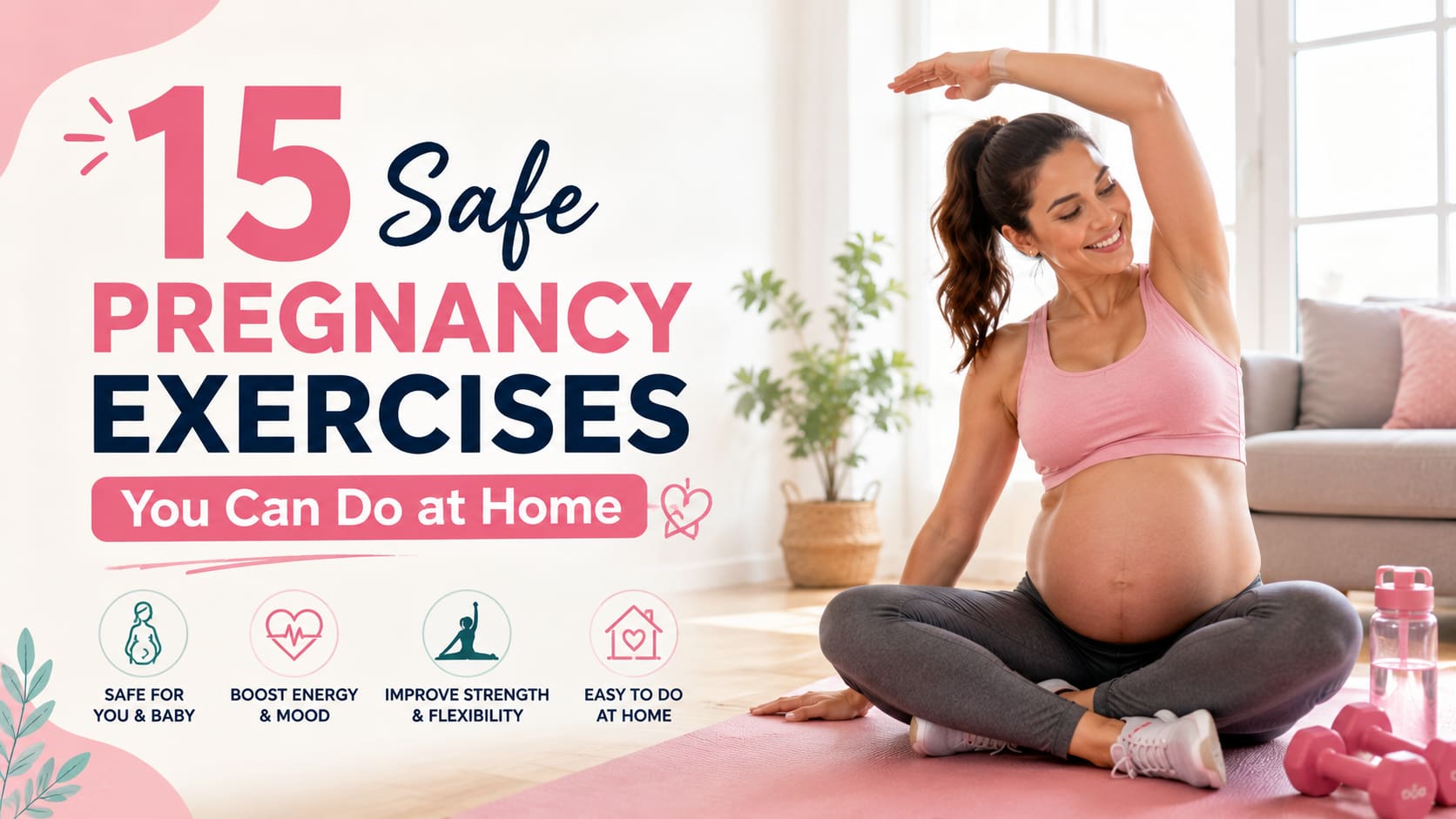
In this guide, you’ll learn 15 safe pregnancy exercises that can help improve strength, flexibility, 15 Safe Pregnancy Exercises You Can Do at Home, circulation, and overall well-being throughout all three trimesters.
Quick Answer
Safe pregnancy exercises include walking, squats, wall push-ups, pelvic tilts, bird dogs, glute bridges, stretching, prenatal yoga, and breathing exercises. These movements can help support strength, mobility, posture, and a healthier pregnancy when performed safely and with healthcare provider approval.
Table of Contents
Benefits of Safe Pregnancy Exercises
Many women assume they should spend most of pregnancy resting.
While rest is important, complete inactivity often creates new challenges.
Regular movement may help:
- Improve energy levels
- Support healthy weight gain
- Reduce pregnancy aches and pains
- Improve circulation
- Promote better sleep
- Reduce stress and anxiety
- Strengthen muscles used during labor
- Improve posture
- Support postpartum recovery
FitMomWay Tip
You don’t need intense workouts to experience benefits. Small, consistent movement often provides better long-term results than occasional hard workouts.
How to Exercise Safely During Pregnancy
Before beginning any fitness routine, talk with your healthcare provider.
Every pregnancy is different.
Follow These Safety Guidelines
- Stay hydrated
- Avoid overheating
- Wear supportive shoes
- Exercise in a comfortable environment
- Listen to your body
- Avoid pushing to exhaustion
- Stop immediately if you experience unusual symptoms
Signs to Stop Exercising
Contact your healthcare provider if you experience:
- Vaginal bleeding
- Severe dizziness
- Chest pain
- Contractions
- Severe shortness of breath
- Sudden swelling
- Severe headaches
The goal is not to push your limits.
The goal is to stay active safely.
15 Safe Pregnancy Exercises You Can Do at Home
1. Walking in Place
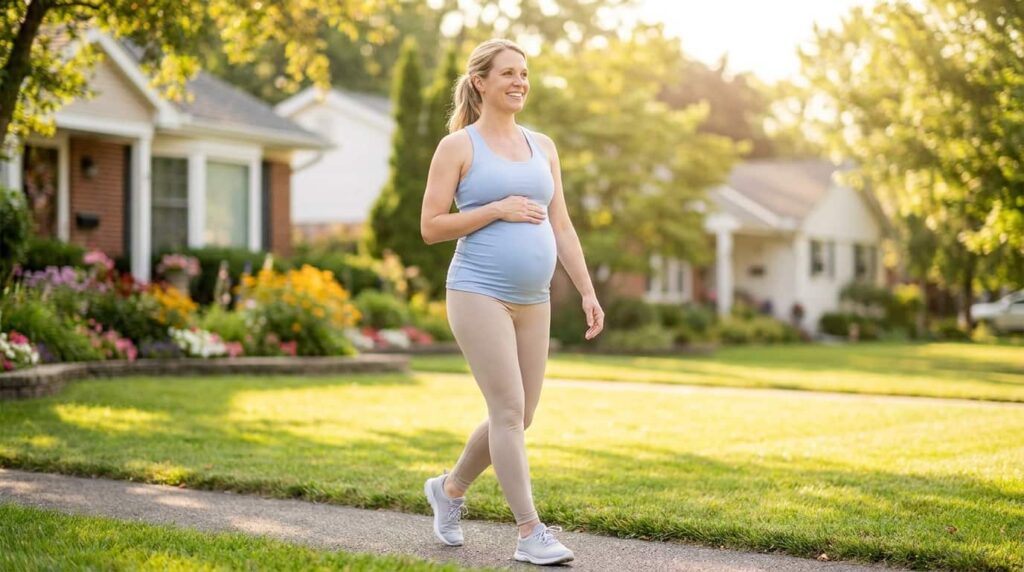
Walking remains one of the safest and most effective pregnancy exercises available.
It’s low-impact, beginner-friendly, and easy to adjust as your pregnancy progresses.
If you’re feeling too tired for a full workout, even 10–15 minutes of walking in place can help increase circulation and improve energy levels.
Benefits:
- Improves cardiovascular health
- Supports healthy weight gain
- Boosts circulation
- Reduces stiffness
Beginner Goal:
Start with 10 minutes and gradually increase to 30 minutes.
2. Bodyweight Squats
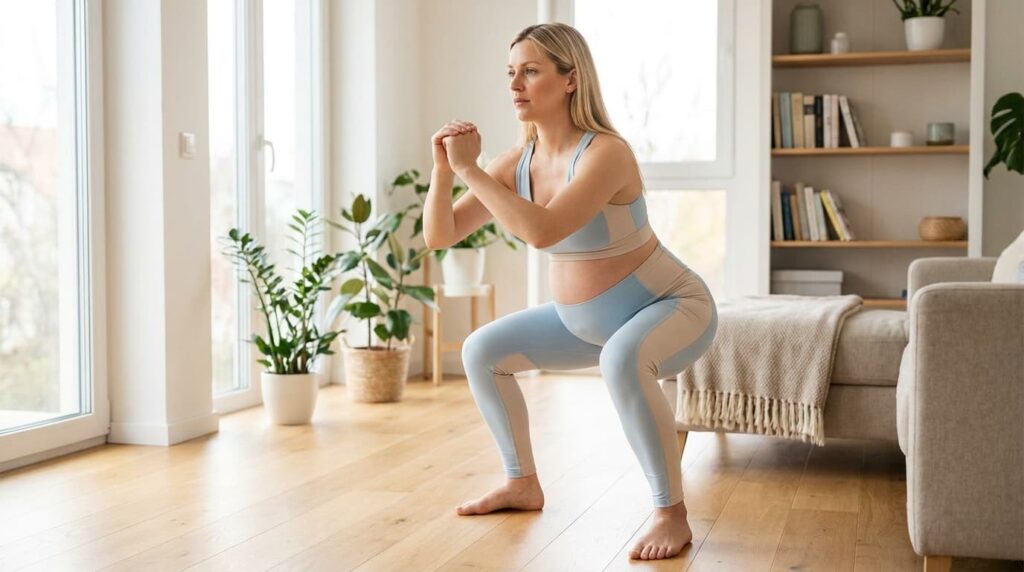
Squats are often considered one of the best safe pregnancy exercises because they strengthen the lower body and support functional movement.
Strong legs and glutes can make daily activities easier and may help prepare your body for labor.
How to Do It:
- Stand with feet shoulder-width apart.
- Keep your chest lifted.
- Lower your hips slowly.
- Return to standing.
Benefits:
- Strengthens legs and glutes
- Supports pelvic mobility
- Improves balance
Beginner Goal:
2 sets of 10 repetitions.
3. Wall Push-Ups
Traditional push-ups may become uncomfortable during pregnancy.
Wall push-ups provide a safer alternative while still strengthening the upper body.
How to Do It:
- Stand facing a wall.
- Place your hands on the wall.
- Bend your elbows slowly.
- Push back to the starting position.
Benefits:
- Strengthens arms
- Improves posture
- Supports upper-body endurance
Beginner Goal:
2 sets of 10 repetitions.
4. Pelvic Tilts
As your belly grows, lower back discomfort often becomes more common.
Pelvic tilts are gentle movements that may help relieve tension while strengthening the pelvic area.
How to Do It:
- Stand against a wall.
- Gently tilt your pelvis forward and backward.
- Move slowly and comfortably.
Benefits:
- Supports pelvic health
- May reduce lower back discomfort
- Improves body awareness
Beginner Goal:
10–15 repetitions.
5. Bird Dog Exercise
The bird dog is a pregnancy-friendly exercise that targets stability and core control.
Unlike traditional abdominal exercises, bird dogs place minimal pressure on the abdomen.
How to Do It:
- Begin on hands and knees.
- Extend one arm forward.
- Extend the opposite leg backward.
- Return slowly.
Benefits:
- Improves balance
- Strengthens the core
- Supports posture
Beginner Goal:
8 repetitions per side.
6. Glute Bridges
Strong glutes can help support your lower back and pelvis throughout pregnancy.
Glute bridges are simple yet highly effective.
How to Do It:
- Lie comfortably with knees bent.
- Lift your hips gently.
- Pause briefly.
- Lower slowly.
Benefits:
- Strengthens glutes
- Supports pelvic stability
- May improve posture
Beginner Goal:
2 sets of 10 repetitions.
7. Side Leg Raises
Side leg raises target muscles that help stabilize the hips and pelvis.
These muscles often become increasingly important as pregnancy progresses.
How to Do It:
- Stand holding a chair or wall.
- Lift one leg to the side.
- Lower slowly.
Benefits:
- Strengthens hips
- Improves balance
- Supports mobility
Beginner Goal:
10 repetitions per side.
8. Seated Knee Lifts
This gentle exercise helps maintain mobility while being easy on the joints.
Benefits:
- Improves circulation
- Encourages movement
- Beginner friendly
How to Do It:
- Sit in a sturdy chair.
- Lift one knee toward your chest.
- Lower slowly.
- Alternate sides.
Beginner Goal:
10 repetitions per side.
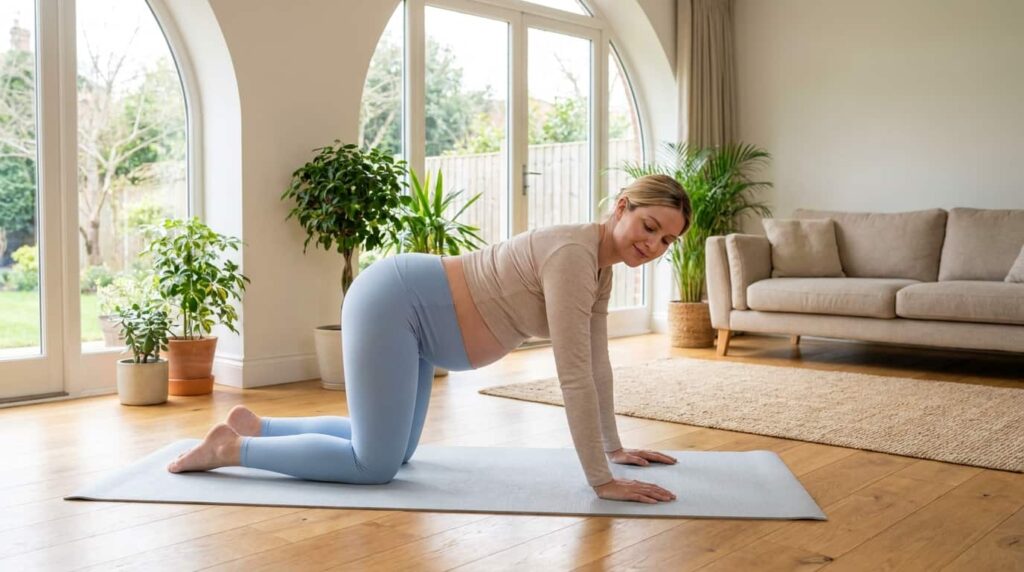
9. Cat-Cow Stretch
Cat-cow is one of the most popular prenatal stretching exercises because it helps improve spinal mobility and may reduce back tension.
As pregnancy progresses, many women notice increased stiffness in the lower back. This gentle movement can help keep the spine mobile without putting pressure on the abdomen.
How to Do It:
- Start on your hands and knees.
- Slowly arch your back while lowering your head.
- Then gently lift your head and allow your belly to relax.
- Move slowly and comfortably.
Benefits:
- Improves flexibility
- Reduces back stiffness
- Encourages gentle movement
Beginner Goal:
8–10 slow repetitions.
10. Butterfly Stretch
The butterfly stretch is a simple exercise that targets the inner thighs and hips.
These areas often become tight during pregnancy, especially if you’re sitting for long periods.
How to Do It:
- Sit comfortably on the floor.
- Bring the soles of your feet together.
- Let your knees gently fall outward.
- Hold the stretch without bouncing.
Benefits:
- Improves hip flexibility
- Supports pelvic mobility
- Encourages relaxation
Beginner Goal:
Hold for 20–30 seconds.
11. Shoulder Rolls
Pregnancy often changes posture.
As your belly grows, your shoulders may round forward, creating tension in the neck and upper back.
Shoulder rolls are a quick and effective way to release tightness.
How to Do It:
- Sit or stand comfortably.
- Roll your shoulders forward slowly.
- Reverse the movement.
Benefits:
- Improves posture
- Relieves upper-body tension
- Supports mobility
Beginner Goal:
10 forward and 10 backward rolls.
12. Standing Side Stretch
This exercise stretches the sides of the body while encouraging better posture.
Many pregnant women enjoy this stretch because it creates space through the torso and feels especially good during the second and third trimesters.
How to Do It:
- Stand with feet hip-width apart.
- Raise one arm overhead.
- Lean gently to the opposite side.
- Hold and switch sides.
Benefits:
- Improves flexibility
- Reduces tightness
- Encourages better posture
Beginner Goal:
Hold for 15–20 seconds per side.
13. Heel Raises
Heel raises are simple but effective.
They strengthen the calves and may help support circulation.
This can be especially useful if you’re spending a lot of time sitting or standing throughout the day.
How to Do It:
- Stand near a wall or chair.
- Rise onto your toes.
- Lower slowly.
Benefits:
- Strengthens calves
- Improves circulation
- Supports balance
Beginner Goal:
15 repetitions.
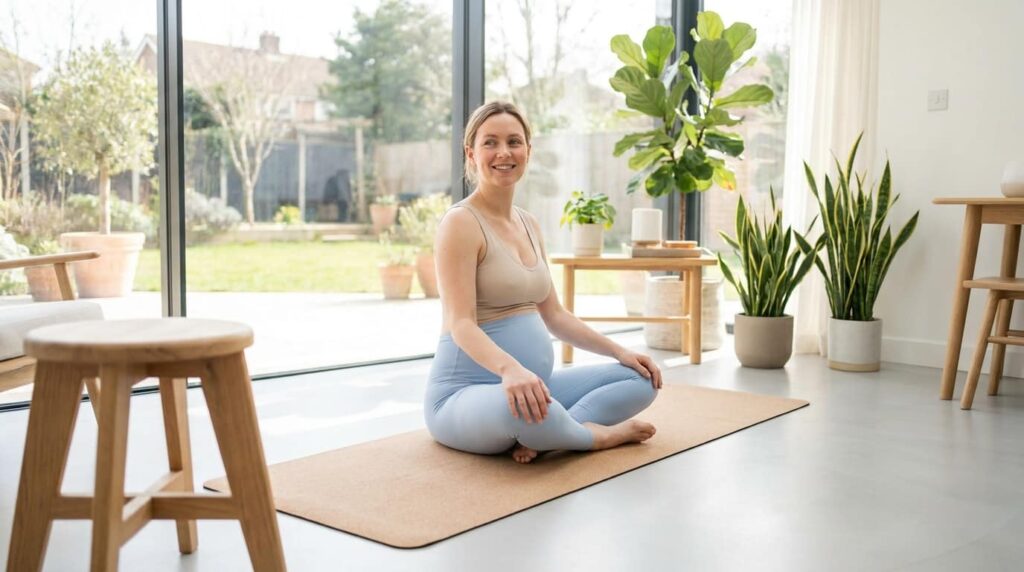
14. Prenatal Yoga Poses
Prenatal yoga combines stretching, breathing, and relaxation techniques that can help support pregnancy wellness.
You don’t need to be experienced with yoga to benefit.
Simple pregnancy-friendly poses can help improve flexibility and reduce stress.
Benefits:
- Improves flexibility
- Supports relaxation
- Encourages mindfulness
- May reduce stress
Examples:
- Child’s Pose (modified)
- Cat-Cow
- Butterfly Stretch
- Seated Side Stretch
15. Deep Breathing Exercises
Many women overlook breathing exercises when creating a pregnancy fitness routine.
However, breathing techniques can play an important role in reducing stress and preparing for labor.
How to Do It:
- Sit comfortably.
- Inhale slowly through your nose.
- Exhale slowly through your mouth.
- Focus on slow, controlled breathing.
Benefits:
- Encourages relaxation
- Supports stress management
- Improves body awareness
Beginner Goal:
5 minutes daily.
Best Daily Habits to Support Pregnancy Fitness
Exercise is only one part of the equation.
Healthy daily habits can make a significant difference in how you feel throughout pregnancy.
Stay Hydrated
Water supports:
- Circulation
- Digestion
- Temperature regulation
- Exercise performance
Carry a water bottle throughout the day and sip regularly.
Prioritize Sleep
Quality sleep supports:
- Recovery
- Energy levels
- Overall health
Aim for a consistent bedtime whenever possible.
Eat Balanced Meals
Focus on:
- Lean protein
- Fruits
- Vegetables
- Whole grains
- Healthy fats
Nutrition provides the fuel your body needs to stay active.
Move Throughout the Day
Even if you don’t complete a formal workout, regular movement matters.
Try:
- Short walks
- Stretching breaks
- Household activities
Listen to Your Body
Some days you’ll feel energetic.
Other days you may need extra rest.
Both are normal.
Sample Weekly Pregnancy Workout Plan
Monday
- 20-minute walk
- Butterfly stretch
Tuesday
- Squats
- Wall push-ups
- Heel raises
Wednesday
- Prenatal yoga
- Breathing exercises
Thursday
- Walking
- Bird dog exercise
Friday
- Glute bridges
- Side leg raises
- Shoulder rolls
Saturday
- Cat-cow stretch
- Mobility exercises
Sunday
- Rest day
- Gentle walk if desired
Common Pregnancy Exercise Mistakes
Doing Too Much Too Soon
Many women try to maintain their pre-pregnancy fitness level.
Pregnancy is not the time to push your body to extremes.
Skipping Warm-Ups
A proper warm-up prepares muscles and joints for movement.
Ignoring Hydration
Dehydration may increase fatigue and discomfort.
Comparing Yourself to Other Moms
Every pregnancy is different.
Focus on your own journey.
Exercising Through Pain
Discomfort is one thing.
Pain is another.
Always listen to your body.
Exercises to Avoid During Pregnancy
Certain activities may not be suitable during pregnancy.
Examples include:
- Contact sports
- Activities with a high risk of falling
- Exercises that cause pain
- Overheating workouts
- Extreme abdominal exercises
- Heavy lifting without professional guidance
Always follow the advice of your healthcare provider.
Frequently Asked Questions
Are safe pregnancy exercises really beneficial?
Yes. Regular physical activity may help improve energy, circulation, sleep, and overall well-being.
Can beginners exercise during pregnancy?
Absolutely. Many women begin with walking, stretching, and simple bodyweight movements.
Is walking enough exercise during pregnancy?
Walking is one of the most recommended safe pregnancy exercises and provides many benefits.
Can I do squats while pregnant?
Many women can safely perform bodyweight squats with proper form and medical approval.
What exercise helps pregnancy back pain?
Pelvic tilts, cat-cow stretches, walking, and glute strengthening exercises are often helpful.
Is prenatal yoga safe?
Prenatal yoga can be a beneficial option when modified for pregnancy.
Can exercise help prepare for labor?
Regular movement may help improve endurance, strength, mobility, and body awareness.
How often should I exercise during pregnancy?
Many women benefit from regular activity throughout the week, adjusted to their comfort level.
What should I do if I feel tired?
Reduce intensity, take breaks, and prioritize recovery.
When should I stop exercising and call my healthcare provider?
Stop immediately if you experience unusual symptoms such as dizziness, bleeding, severe pain, or contractions.
Conclusion
Staying active during pregnancy doesn’t require complicated workouts or expensive equipment.
These safe pregnancy exercises can help improve strength, flexibility, posture, circulation, and overall well-being from the comfort of your home.
Remember that pregnancy fitness isn’t about perfection.
It’s about supporting your body through one of the most important journeys of your life.
Start small.
Stay consistent.
Listen to your body.
And celebrate every step you take toward a healthier pregnancy.
Disclaimer
FitMomWay provides educational and informational content only and does not offer medical advice, diagnosis, or treatment. Always consult your healthcare provider before starting any pregnancy fitness, nutrition, or wellness program.
If you experience pain, dizziness, bleeding, contractions, or unusual symptoms while exercising, stop immediately and seek medical advice.
Last Updated: June 2026
By FitMomWay Team

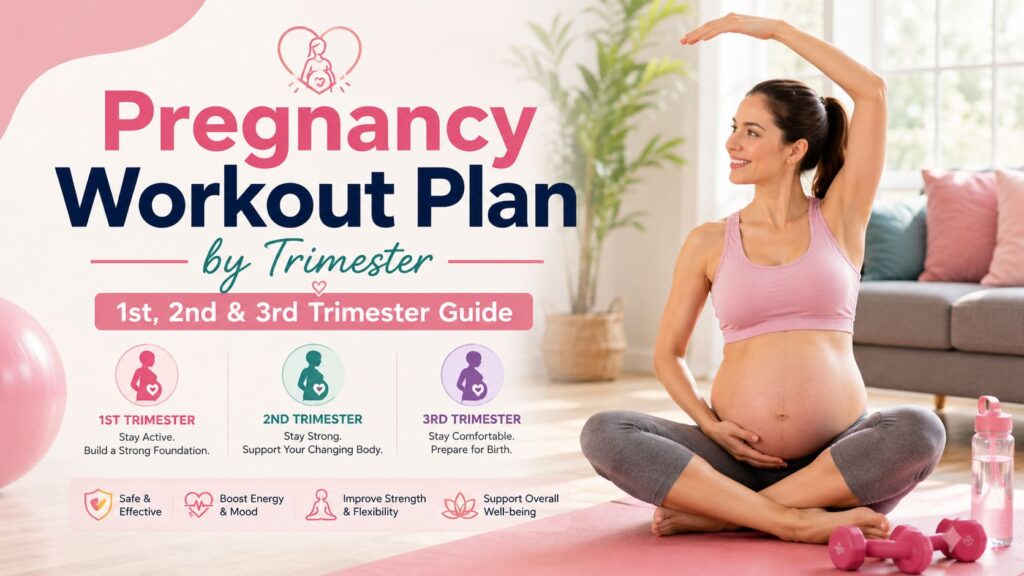

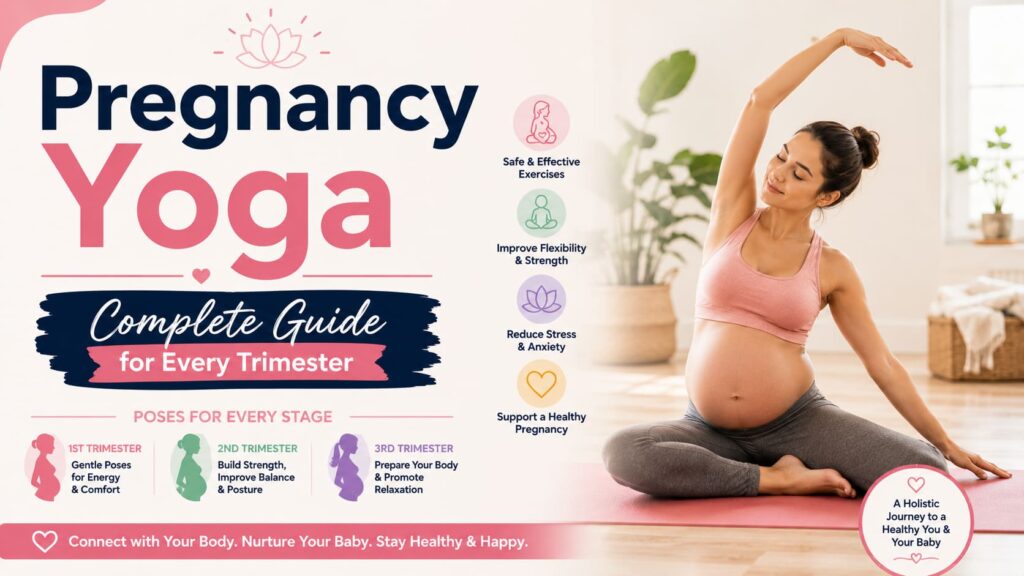
[…] of the biggest mistakes Pregnant women make is following the exact same workout routine throughout all three […]
[…] body changes throughout pregnancy, so your exercise routine should also […]