
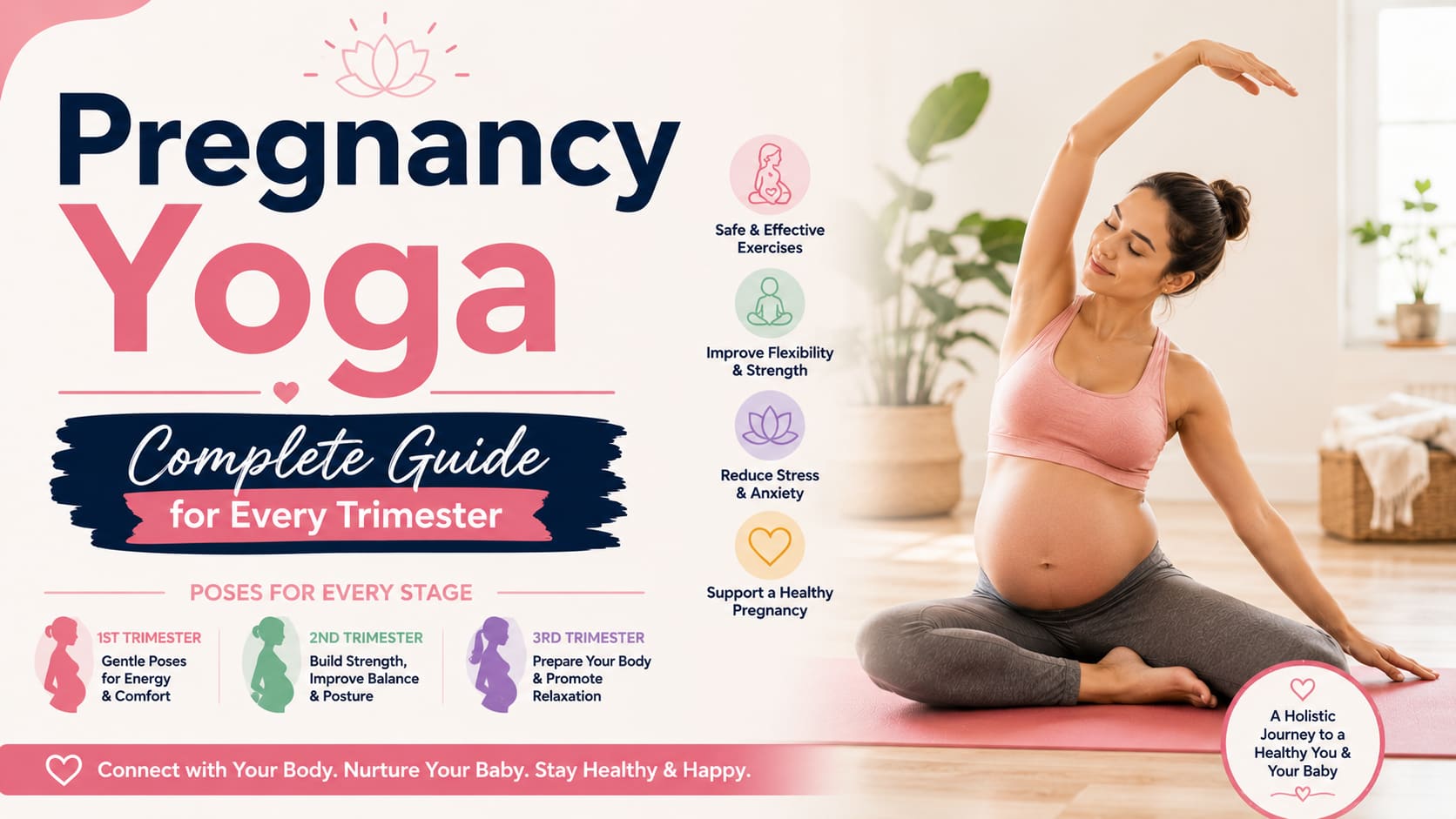
Pregnancy is an exciting journey filled with many physical and emotional changes. As your baby grows, your body adapts in remarkable ways, but these changes can also bring back pain, muscle tightness, swelling, stress, and fatigue. One of the safest and most effective ways to stay active during pregnancy is through pregnancy yoga.
Pregnancy yoga combines gentle stretching, breathing exercises, relaxation, and safe movement to help support both your physical and emotional well-being. Unlike regular yoga classes, prenatal yoga is specifically designed for expecting mothers, focusing on exercises that accommodate your changing body while helping prepare you for labor and delivery.
Whether you’re new to yoga or already have experience, pregnancy yoga can help improve flexibility, strengthen important muscles, reduce common pregnancy discomforts, and promote relaxation throughout every trimester.
In this complete guide, you’ll learn the benefits of pregnancy yoga, when it’s safe to start, the best poses for each trimester, breathing techniques, safety tips, common mistakes to avoid, and a beginner-friendly routine you can follow at home.
Quick Answer
Pregnancy yoga is a gentle form of exercise designed specifically for pregnant women. It combines safe stretches, breathing techniques, balance exercises, and relaxation to improve flexibility, reduce pregnancy discomfort, strengthen muscles used during labor, and promote overall well-being. Most healthy pregnancies can safely include prenatal yoga after approval from a healthcare provider.
Table of Contents
What Is Pregnancy Yoga?
Pregnancy yoga, also called prenatal yoga, is a modified style of yoga created specifically for women during pregnancy.
Unlike traditional yoga, pregnancy yoga avoids poses that place excessive pressure on the abdomen, require lying flat on the back for extended periods, involve deep twists, or increase the risk of falling.
Instead, prenatal yoga focuses on:
- Gentle stretching
- Controlled breathing
- Safe strengthening exercises
- Pelvic floor awareness
- Balance improvement
- Relaxation techniques
- Mind-body connection
These movements help your body adapt to pregnancy while preparing you for childbirth and postpartum recovery.
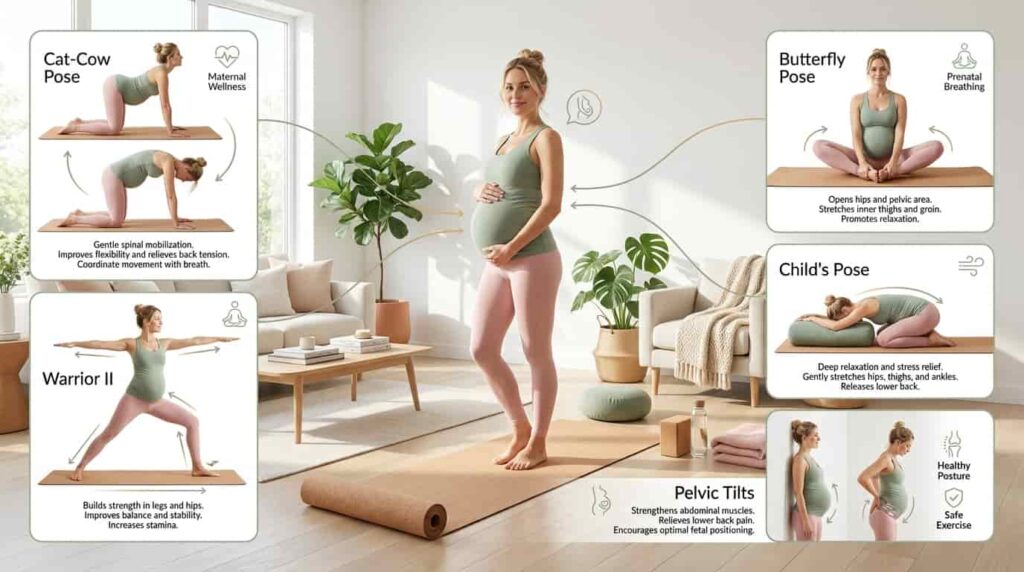
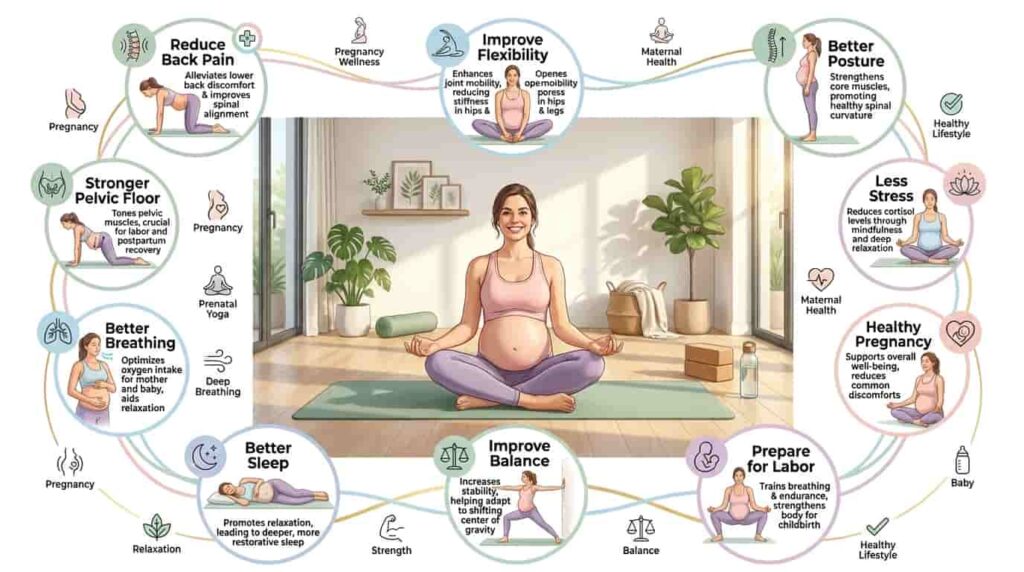
Benefits of Pregnancy Yoga
Practicing pregnancy yoga regularly offers benefits for both you and your growing baby.
Helps Reduce Back Pain
As pregnancy progresses, your center of gravity changes and your growing belly places additional strain on your lower back.
Gentle yoga stretches help relieve muscle tension, improve posture, and reduce lower back discomfort.
Improves Flexibility
Pregnancy naturally affects joint mobility due to hormonal changes.
Safe stretching helps maintain flexibility while improving comfort during everyday activities.
Strengthens Key Muscles
Pregnancy yoga strengthens muscles that support your:
- Back
- Hips
- Pelvic floor
- Legs
- Core
- Shoulders
Building strength now can make labor, delivery, and postpartum recovery easier.
Improves Balance
As your belly grows, maintaining balance becomes more challenging.
Prenatal yoga improves body awareness and stability through controlled movement.
Encourages Better Breathing
Learning proper breathing techniques during pregnancy can help you:
- Reduce stress
- Improve oxygen flow
- Stay calm during contractions
- Support relaxation during labor
May Improve Sleep Quality
Many expecting moms experience difficulty sleeping.
Gentle evening yoga routines may help relax your muscles and calm your mind before bedtime.
Supports Mental Well-Being
Pregnancy can bring emotional ups and downs.
Yoga encourages mindfulness and relaxation, helping many women feel calmer and more connected throughout pregnancy.
FitMomWay Tip
Pregnancy yoga isn’t about mastering advanced poses. It’s about moving safely, breathing deeply, and listening to your body’s changing needs.
Is Pregnancy Yoga Safe?
For most women with healthy pregnancies, pregnancy yoga is considered a safe form of exercise.
However, every pregnancy is different.
Before beginning any exercise program, talk with your obstetrician or healthcare provider, especially if you have:
- High-risk pregnancy
- Placenta previa
- Severe anemia
- Uncontrolled high blood pressure
- Preeclampsia
- Cervical insufficiency
- Preterm labor risk
- Multiple pregnancy with complications
Your healthcare provider can help determine which activities are appropriate for you.
When Can You Start Pregnancy Yoga?
Many women can begin prenatal yoga during the first trimester if they feel well and have received approval from their healthcare provider.
If you’re experiencing severe nausea, dizziness, or fatigue during early pregnancy, you may prefer to wait until the second trimester before beginning regular sessions.
The most important factor is listening to your body rather than following a strict timeline.
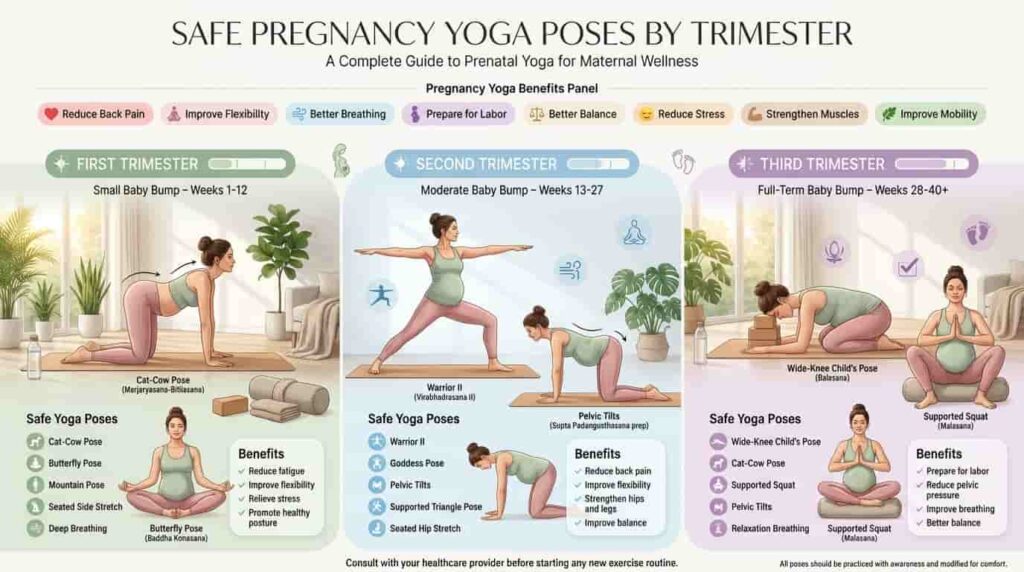
Pregnancy Yoga by Trimester
Your body changes throughout pregnancy, so your yoga practice should change as well.
First Trimester
During the first trimester, your body is adjusting to significant hormonal changes.
Many women experience:
- Fatigue
- Morning sickness
- Breast tenderness
- Mood changes
Goals during this stage include:
- Gentle movement
- Stress reduction
- Breathing practice
- Improving circulation
Suitable activities include:
- Gentle stretching
- Cat-Cow
- Butterfly Pose
- Child’s Pose (modified if needed)
- Deep breathing exercises
Avoid overheating and intense workouts during this stage.
Second Trimester
Many moms feel more energetic during the second trimester.
This is often the ideal time to establish a consistent pregnancy yoga routine.
Goals include:
- Improving flexibility
- Strengthening legs and hips
- Maintaining posture
- Preparing the body for labor
Recommended poses include:
- Warrior II (modified)
- Side Angle Pose (supported)
- Bound Angle Pose
- Cat-Cow
- Seated Side Stretch
- Standing Hip Opener
As your belly grows, use blocks or a sturdy chair for additional support whenever needed.
Third Trimester
The third trimester focuses on comfort, mobility, and preparing for childbirth.
Your yoga sessions should become slower and more restorative.
Goals include:
- Reducing back pain
- Opening the hips
- Improving breathing
- Promoting relaxation
- Preparing mentally for labor
Recommended poses include:
- Supported Squat
- Butterfly Pose
- Cat-Cow
- Wide-Knee Child’s Pose
- Pelvic Tilts
- Gentle Hip Circles
Avoid movements that cause discomfort or place pressure on your abdomen.
Signs to Stop Exercising
Although pregnancy yoga is generally safe, stop immediately and contact your healthcare provider if you experience:
- Vaginal bleeding
- Fluid leakage
- Severe abdominal pain
- Chest pain
- Dizziness
- Shortness of breath before exertion
- Painful contractions
- Reduced fetal movement
- Severe headache
Your safety and your baby’s health should always come first.
FitMomWay Tip
Every pregnancy is unique. Never compare your yoga practice to someone else’s. Modify poses whenever needed and focus on how your body feels rather than how a pose looks.
Best Pregnancy Yoga Poses
The following pregnancy yoga poses are considered safe for most healthy pregnancies when performed correctly. Always move slowly, avoid pain, and stop if you feel dizzy or uncomfortable.
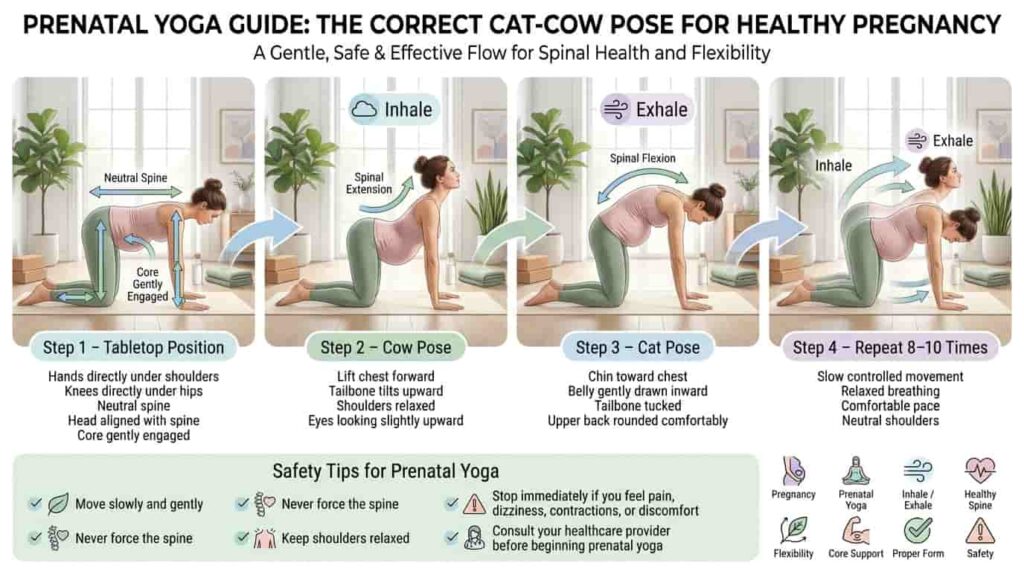
1. Cat-Cow Pose
Cat-Cow is one of the best prenatal yoga poses because it gently stretches the spine and relieves lower back pain.
Benefits
- Reduces back pain
- Improves posture
- Relieves spinal tension
- Encourages baby-friendly positioning
How to Do It
- Start on your hands and knees.
- Keep your wrists below your shoulders.
- Inhale and lift your head while arching your back.
- Exhale and gently round your spine.
- Repeat for 8–10 breaths.
2. Butterfly Pose
Butterfly Pose helps open the hips and improve flexibility.
Benefits
- Opens hips
- Improves pelvic flexibility
- Reduces inner thigh tightness
Steps
- Sit comfortably.
- Bring the soles of your feet together.
- Allow your knees to relax outward.
- Hold your feet gently.
- Sit tall and breathe deeply.
3. Child’s Pose (Wide Knee)
A modified Child’s Pose provides excellent relaxation throughout pregnancy.
Benefits
- Relieves lower back tension
- Reduces stress
- Opens hips
- Promotes relaxation
Use pillows beneath your chest if needed for additional support.
4. Seated Side Stretch
Pregnancy often causes tightness along the sides of the body.
This stretch helps create more space for your growing baby.
Benefits
- Improves flexibility
- Relieves rib discomfort
- Opens the chest
- Encourages deeper breathing
5. Warrior II (Modified)
Warrior II safely strengthens the lower body.
Benefits
- Strengthens legs
- Improves endurance
- Enhances balance
- Supports pelvic stability
Avoid bending too deeply into the front knee.
6. Goddess Pose
This pose strengthens the hips and legs while encouraging pelvic mobility.
Benefits
- Strengthens thighs
- Opens hips
- Improves stability
- Builds endurance for labor
7. Pelvic Tilts
Pelvic tilts are simple but highly effective during pregnancy.
Benefits
- Relieves lower back pain
- Strengthens core muscles
- Improves pelvic alignment
8. Supported Squat
With support from a chair or yoga blocks, squats prepare your hips for childbirth.
Benefits
- Opens pelvis
- Improves flexibility
- Strengthens legs
- Encourages healthy posture
Only perform supported squats if approved by your healthcare provider.
Pregnancy Yoga Breathing Techniques
Breathing is one of the most valuable skills you’ll learn during pregnancy yoga.
Diaphragmatic Breathing
This deep breathing technique promotes relaxation.
Steps
- Sit comfortably.
- Place one hand on your chest.
- Place one hand on your belly.
- Inhale slowly through your nose.
- Feel your belly gently expand.
- Exhale slowly through your mouth.
Practice for 5–10 minutes daily.
Slow Rhythmic Breathing
This technique may help during labor contractions.
Try inhaling for four counts and exhaling for six counts.
Box Breathing
Box breathing is excellent for reducing anxiety.
Pattern:
- Inhale for 4
- Hold for 4
- Exhale for 4
- Hold for 4
Repeat several cycles.
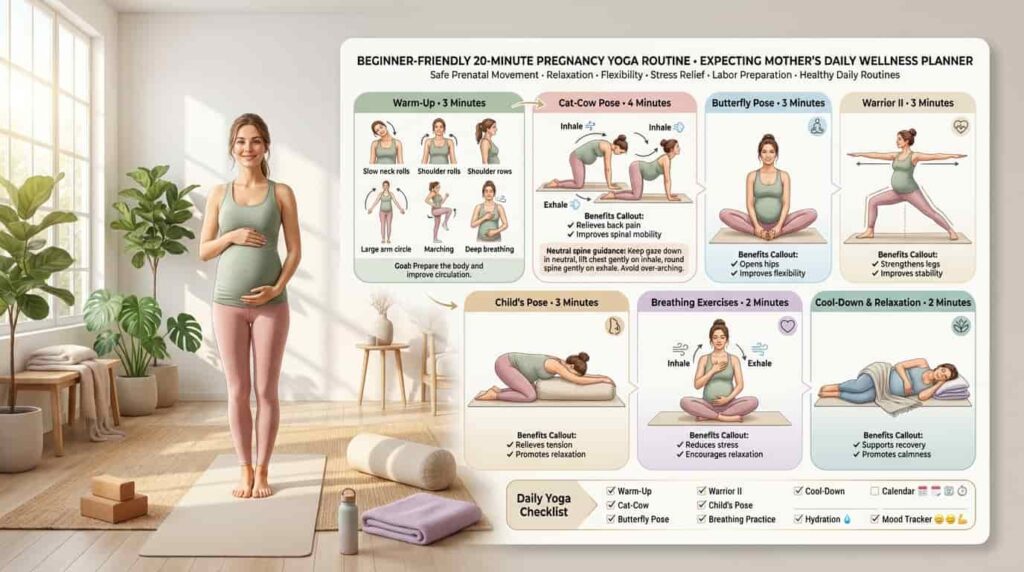
Pregnancy Yoga Routine for Beginners
Here’s a simple 20-minute prenatal yoga routine suitable for most healthy pregnancies.
| Exercise | Time |
|---|---|
| Deep Breathing | 2 minutes |
| Neck Rolls | 1 minute |
| Shoulder Rolls | 1 minute |
| Cat-Cow | 3 minutes |
| Butterfly Pose | 3 minutes |
| Seated Side Stretch | 2 minutes |
| Warrior II | 4 minutes |
| Child’s Pose | 2 minutes |
| Relaxation | 2 minutes |
Practice this routine 3–5 times each week for the best results.
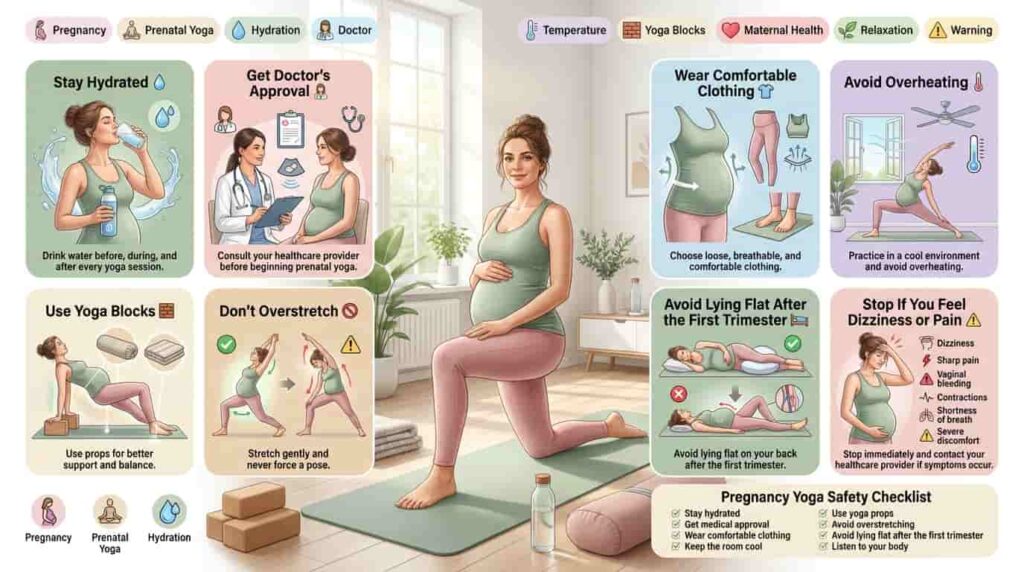
Pregnancy Yoga Safety Tips
Follow these important safety guidelines.
- Always get medical approval before exercising.
- Wear comfortable clothing.
- Stay hydrated.
- Avoid overheating.
- Move slowly.
- Never force a stretch.
- Avoid lying flat on your back after the first trimester for long periods.
- Skip deep twists.
- Avoid poses that compress your abdomen.
- Use yoga blocks and cushions whenever needed.
Pregnancy Yoga Mistakes to Avoid
Many beginners unknowingly make mistakes that increase discomfort or reduce the effectiveness of their practice.
Holding Your Breath
Always breathe naturally throughout every pose.
Stretching Too Deeply
Pregnancy hormones loosen your joints, increasing the risk of overstretching.
Stretch gently.
Ignoring Pain
Pain is never normal during pregnancy yoga.
Stop immediately if something doesn’t feel right.
Comparing Yourself to Others
Every pregnancy is different.
Focus on your own comfort instead of how someone else performs a pose.
Practicing Without Support
Yoga blocks, blankets, bolsters, and chairs make many poses safer and more comfortable.
Exercising While Exhausted
Some days your body needs more rest than movement.
Listen to your body.
FitMomWay Tip
Think of pregnancy yoga as preparation for motherhood—not a workout competition. Consistency matters far more than intensity.
Pregnancy Yoga Benefits by Trimester
| Trimester | Main Benefits |
|---|---|
| First Trimester | Reduces stress, improves circulation, encourages gentle movement |
| Second Trimester | Builds strength, improves flexibility, supports posture |
| Third Trimester | Relieves back pain, opens hips, prepares for labor, promotes relaxation |
Equipment You’ll Need
You don’t need an expensive home yoga studio.
Basic equipment includes:
- Yoga mat
- Yoga blocks
- Bolster or firm pillow
- Blanket
- Chair for balance
- Water bottle
- Comfortable clothing
These simple tools can make your practice much safer and more enjoyable.
Who Should Avoid Pregnancy Yoga?
Although pregnancy yoga is safe for many women, some situations require extra caution.
Speak with your healthcare provider first if you have:
- Placenta previa after 26 weeks
- Severe preeclampsia
- High-risk pregnancy
- Preterm labor
- Significant vaginal bleeding
- Cervical insufficiency
- Serious heart or lung conditions
Your doctor may recommend modified exercises or temporary activity restrictions depending on your pregnancy.
Frequently Asked Questions About Pregnancy Yoga
Is pregnancy yoga safe?
Yes. Pregnancy yoga is generally safe for women with healthy pregnancies when approved by their healthcare provider. It uses gentle movements, breathing exercises, and stretches designed specifically for pregnancy. Women with high-risk pregnancies should consult their doctor before starting any exercise program.
When should I start pregnancy yoga?
You can usually begin pregnancy yoga during the first trimester if your healthcare provider approves. Many women find the second trimester the most comfortable time to establish a regular yoga routine because morning sickness often improves and energy levels increase.
Can I do yoga every day while pregnant?
Yes. Most healthy pregnant women can safely practice gentle prenatal yoga for 20–30 minutes daily. Listen to your body, stay hydrated, and take rest days whenever needed.
Which yoga poses should I avoid during pregnancy?
Avoid:
- Deep backbends
- Strong abdominal exercises
- Deep twists
- Hot yoga
- Inversions unless you’re highly experienced and your instructor approves
- Lying flat on your back for long periods after the first trimester
- Any pose that causes pain or dizziness
Does pregnancy yoga help with labor?
Yes. Regular pregnancy yoga can improve flexibility, breathing control, pelvic mobility, posture, and relaxation, all of which may help you feel more prepared for labor and delivery.
Can pregnancy yoga reduce back pain?
Many women experience relief from pregnancy-related back pain through gentle prenatal yoga. Poses like Cat-Cow, Child’s Pose, and Pelvic Tilts help reduce spinal tension while strengthening muscles that support your growing belly.
How long should a pregnancy yoga session be?
A beginner session typically lasts between 20 and 30 minutes. More experienced practitioners may enjoy sessions lasting up to 45–60 minutes, provided they remain comfortable and follow prenatal exercise guidelines.
Do I need special equipment for pregnancy yoga?
Not much. A few basic items can make your practice safer and more comfortable:
- Yoga mat
- Yoga blocks
- Bolster or firm pillow
- Blanket
- Water bottle
- Comfortable workout clothes
Can beginners do pregnancy yoga?
Absolutely. Prenatal yoga is designed for women of all fitness levels. Beginners should start with simple poses, focus on breathing, and follow classes specifically created for pregnancy.
Is pregnancy yoga better than walking?
Both activities offer excellent benefits.
Walking improves cardiovascular fitness, while pregnancy yoga focuses on flexibility, posture, breathing, balance, stress relief, and preparing the body for labor. Combining both can provide a well-rounded prenatal fitness routine.
Conclusion
Pregnancy yoga is one of the safest and most effective ways to stay active during pregnancy. It combines gentle movement, stretching, strength, and mindful breathing to support both your physical and emotional well-being.
Whether you’re in your first, second, or third trimester, a consistent prenatal yoga routine can help reduce common pregnancy discomforts, improve flexibility, strengthen muscles used during labor, and promote relaxation. The key is to choose pregnancy-safe poses, move at your own pace, and always listen to your body.
If you’re new to prenatal fitness, start with short beginner-friendly sessions and gradually build your confidence. Combined with regular walking, healthy nutrition, and proper rest, pregnancy yoga can become an important part of a healthy and active pregnancy.
FitMomWay Tip: Focus on how your body feels rather than how a pose looks. Pregnancy is about supporting your changing body—not pushing it to its limits.
Disclaimer
FitMomWay provides educational information only and does not offer medical advice. Always consult your healthcare provider before starting any pregnancy fitness, yoga, nutrition, or postpartum exercise program.