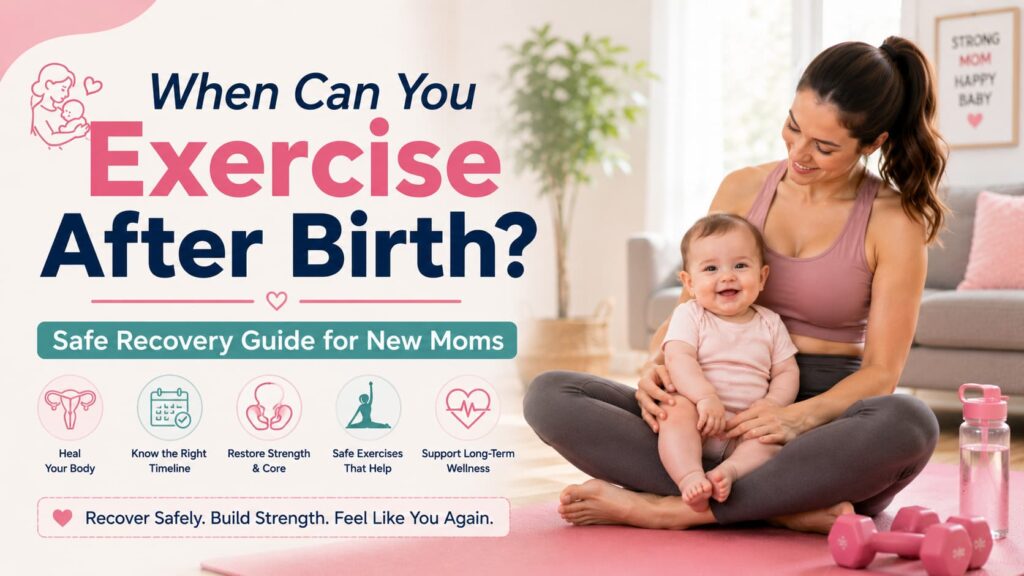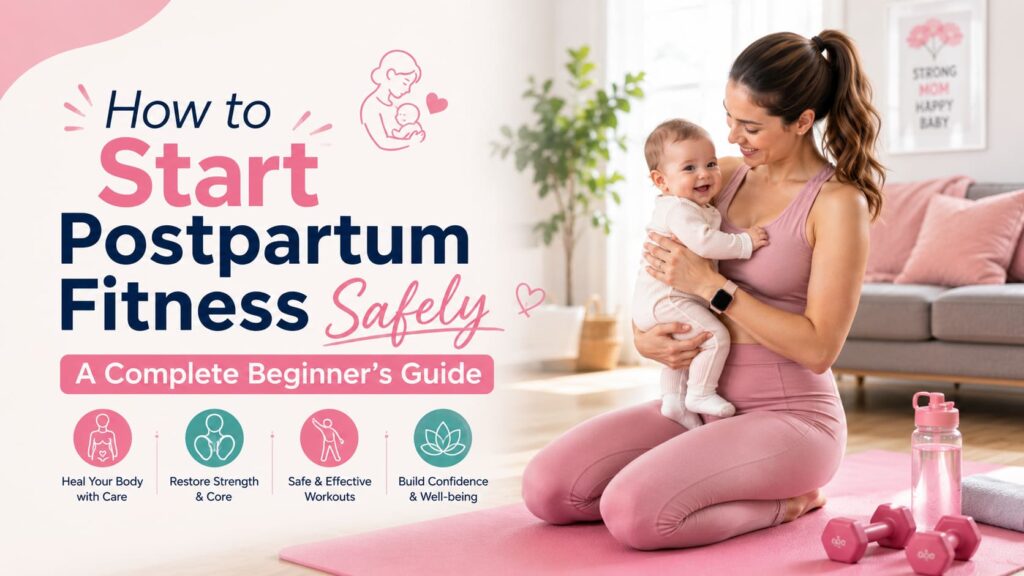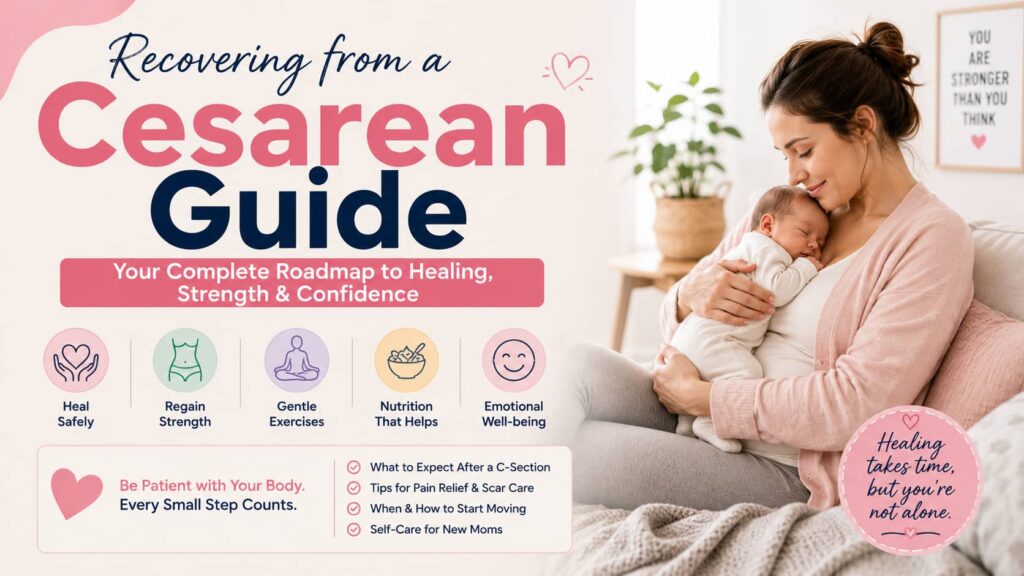

Bringing a new baby into the world is one of life’s greatest joys, but it also places incredible demands on your body. Whether you had a vaginal birth or a C-section, your muscles, joints, pelvic floor, and core all need time to recover before returning to regular exercise.
Many new moms wonder when it’s safe to work out again, which exercises are actually beneficial, and how to lose pregnancy weight without slowing recovery. The truth is that postpartum fitness isn’t about “bouncing back.” It’s about helping your body heal, regain strength, improve energy, and feel healthy again.
A well-planned postpartum workout can reduce back pain, strengthen your core, improve posture, boost your mood, and help you safely return to the activities you enjoy.
In this complete guide, you’ll learn exactly when to start exercising after birth, the safest workouts for every stage of recovery, common mistakes to avoid, and a step-by-step plan designed specifically for new moms.
Quick Answer
A postpartum workout is a recovery-focused exercise program designed for women after childbirth. Most moms can begin gentle walking, deep breathing, and pelvic floor exercises within the first few days after delivery if approved by their healthcare provider. More structured strength training usually begins around six weeks postpartum after medical clearance, although recovery timelines vary depending on your delivery and overall health.
Table of Contents
Why Postpartum Exercise Is Important
Pregnancy changes nearly every muscle in your body. Your abdominal muscles stretch, your pelvic floor supports extra weight for months, and your posture changes as your baby grows.
After birth, your body needs movement that supports healing instead of placing additional stress on recovering muscles and joints.
The right postpartum workout can help you:
- Rebuild core strength
- Strengthen the pelvic floor
- Improve posture
- Reduce lower back pain
- Increase daily energy
- Improve circulation
- Support healthy postpartum weight loss
- Reduce stress and anxiety
- Improve sleep quality
- Build long-term healthy habits
FitMomWay Tip
Your first goal after childbirth isn’t weight loss—it’s recovery. A stronger body naturally makes future fitness easier.
What Is a Postpartum Workout?
A postpartum workout is a fitness program created specifically for women recovering from childbirth.
Unlike regular workout plans, postpartum exercise focuses on healing before intensity.
A good postpartum workout includes:
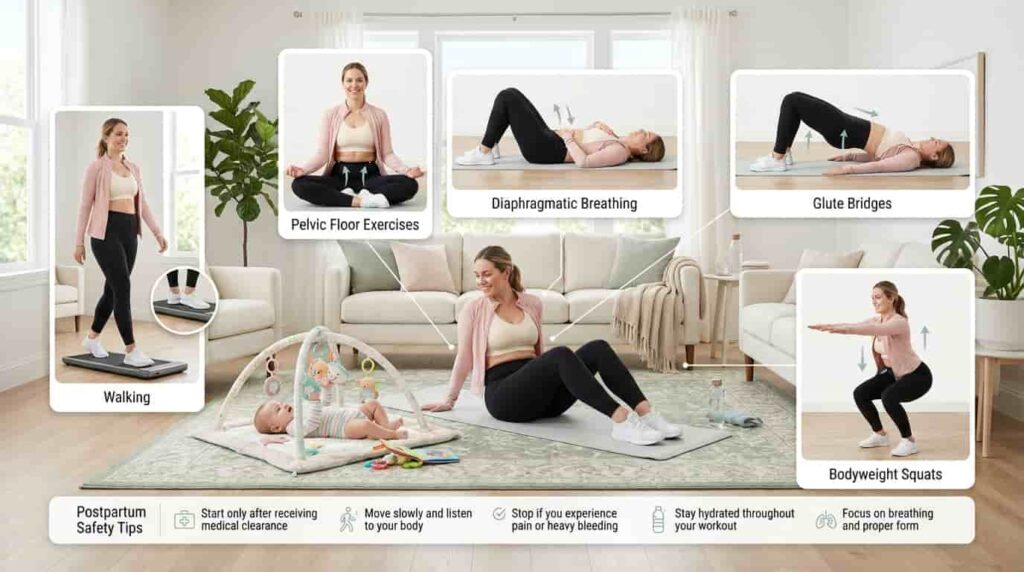
- Gentle walking
- Breathing exercises
- Pelvic floor strengthening
- Core rehabilitation
- Mobility training
- Functional strength exercises
- Low-impact cardio
- Progressive resistance training
As your body heals, the workouts gradually become more challenging while protecting your recovery.
Benefits of a Postpartum Workout
Helps Rebuild Core Strength
During pregnancy, your abdominal muscles stretch to make room for your growing baby. Many women also develop diastasis recti, where the abdominal muscles separate.
Safe postpartum exercises help reconnect and strengthen these muscles over time, improving stability and reducing lower back pain.
Strengthens the Pelvic Floor
Your pelvic floor muscles support the bladder, uterus, and bowel. Pregnancy and childbirth can weaken these muscles, sometimes causing urinary leakage or a feeling of heaviness.
Regular pelvic floor exercises improve muscle strength and support better bladder control.
Improves Posture
New moms spend hours feeding, carrying, and lifting their babies. These repetitive movements often lead to rounded shoulders, neck pain, and back discomfort.
Strength training helps restore proper posture and reduces everyday aches.
Boosts Energy
Although you may feel exhausted during the newborn stage, regular movement improves blood circulation and oxygen delivery throughout the body.
Even a 15-minute walk can increase energy and reduce fatigue.
Supports Healthy Weight Loss
Postpartum workouts burn calories while helping preserve muscle mass.
Combined with balanced nutrition, they support gradual, sustainable weight loss without placing unnecessary stress on your recovering body.
Supports Mental Health
Exercise encourages your body to release endorphins, often called “feel-good” hormones.
Regular movement may help reduce stress, improve mood, and increase confidence during the postpartum period.
If you’re experiencing symptoms of postpartum depression or severe anxiety, speak with your healthcare provider as soon as possible.
When Can You Start a Postpartum Workout?
Every woman’s recovery is different, so there’s no single timeline that works for everyone.
Factors that affect when you can begin exercising include:
- Vaginal birth or C-section
- Overall recovery
- Pain levels
- Bleeding
- Pregnancy complications
- Medical advice
Always follow your healthcare provider’s recommendations before beginning a postpartum exercise program.
After a Vaginal Birth
Many women with uncomplicated vaginal deliveries can begin gentle movement within the first few days after birth.
Suitable activities include:
- Slow walking
- Deep breathing exercises
- Gentle stretching
- Pelvic floor exercises
- Posture exercises
More structured workouts typically begin after your six-week postpartum checkup if you’ve been cleared for exercise.
After a C-Section
A C-section is major abdominal surgery, so recovery usually takes longer.
Your healthcare provider may recommend waiting several weeks before starting structured workouts.
Early movement often includes:
- Gentle walking
- Breathing exercises
- Light mobility work
Avoid heavy lifting, intense core exercises, jumping, or running until you’ve fully healed and received medical clearance.
Signs You’re Ready to Exercise
Rather than focusing only on the calendar, pay attention to your body’s recovery.
You may be ready if:
- Bleeding has significantly decreased or stopped
- You’re walking comfortably
- Your incision is healing well (if applicable)
- Daily activities no longer cause pain
- You feel stable during movement
- Your healthcare provider has approved exercise
Recovery isn’t a race. Progressing slowly often leads to better long-term results.
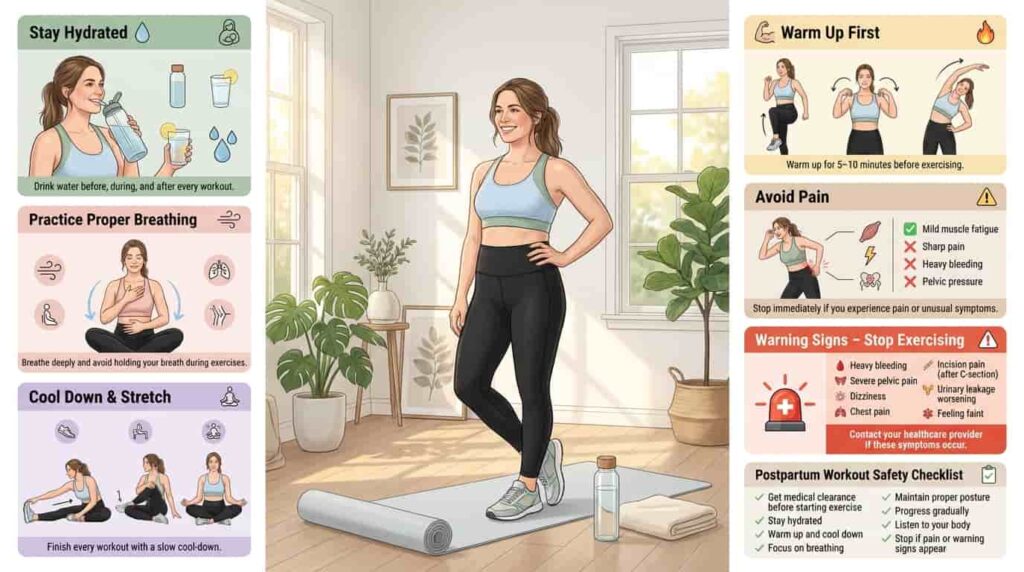
Warning Signs to Stop Exercising
Exercise should leave you feeling stronger—not worse.
Stop your workout and contact your healthcare provider if you notice:
- Heavy vaginal bleeding
- Severe pelvic pain
- Increased incision pain
- Dizziness
- Chest pain
- Shortness of breath
- Worsening urinary leakage
- A heavy or bulging feeling in the pelvic area
Ignoring these symptoms can delay recovery.
Week-by-Week Postpartum Recovery Timeline
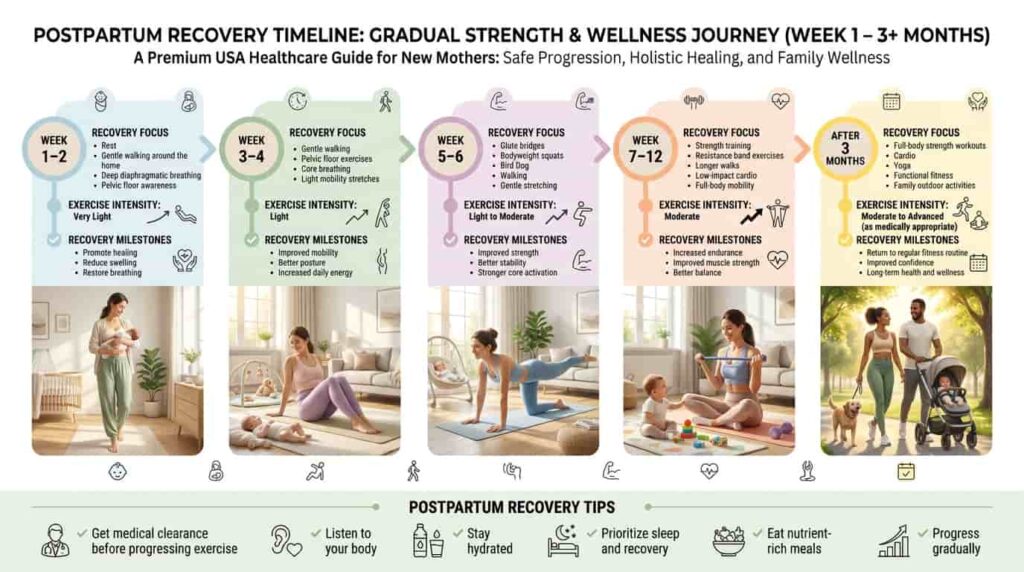
Although every recovery is unique, this general timeline can help you understand what types of movement are commonly appropriate.
Weeks 1–2
Focus on rest and gentle recovery.
Recommended activities include:
- Deep breathing
- Short walks around your home
- Pelvic floor exercises
- Gentle posture work
- Staying hydrated
Avoid:
- Crunches
- Running
- Heavy lifting
- Jumping
- High-intensity workouts
Weeks 3–4
If you’re recovering well, you may gradually increase activity.
You can begin:
- Longer walks
- Gentle mobility exercises
- Light stretching
- Continued pelvic floor strengthening
- Core activation exercises
Always stop if you experience pain or increased bleeding.
Weeks 5–6
Many moms begin preparing for structured exercise around this stage.
Suitable activities may include:
- Bodyweight squats
- Wall push-ups
- Glute bridges
- Resistance band exercises
- Beginner strength workouts
Continue focusing on proper breathing and core engagement.
FitMomWay Tip
Think of your first six weeks as your recovery foundation. Building strength slowly now will help you return to more advanced workouts safely and with greater confidence.
Best Postpartum Exercises for New Moms
Once you’ve built a strong recovery foundation, it’s time to begin exercises that strengthen your entire body without placing unnecessary stress on healing muscles.
The best postpartum workouts focus on rebuilding functional strength rather than burning as many calories as possible.
1. Walking
Walking is one of the safest and most effective postpartum exercises.
Benefits include:
- Improves circulation
- Boosts energy
- Supports weight loss
- Reduces stress
- Strengthens leg muscles
- Easy to fit into a busy schedule
Beginner Goal
Week 1–2
5–10 minutes
Week 3–4
10–20 minutes
Week 5–6
20–30 minutes
After 6 Weeks
30–45 minutes most days of the week
Walking with your baby in a stroller is also a great way to enjoy fresh air together.
2. Pelvic Floor Exercises (Kegels)
Your pelvic floor muscles work hard during pregnancy and childbirth.
Strengthening them can improve bladder control while supporting your core.
How to Perform
- Sit or lie comfortably.
- Tighten the muscles you would use to stop urine flow.
- Hold for five seconds.
- Relax for five seconds.
- Repeat 10–15 times.
Perform this exercise several times throughout the day.
3. Diaphragmatic Breathing
Proper breathing reconnects your deep core muscles.
Steps
- Lie on your back with knees bent.
- Place one hand on your chest.
- Place one hand on your stomach.
- Inhale slowly through your nose.
- Allow your stomach to rise.
- Exhale gently while pulling your core inward.
Practice for five minutes every day.
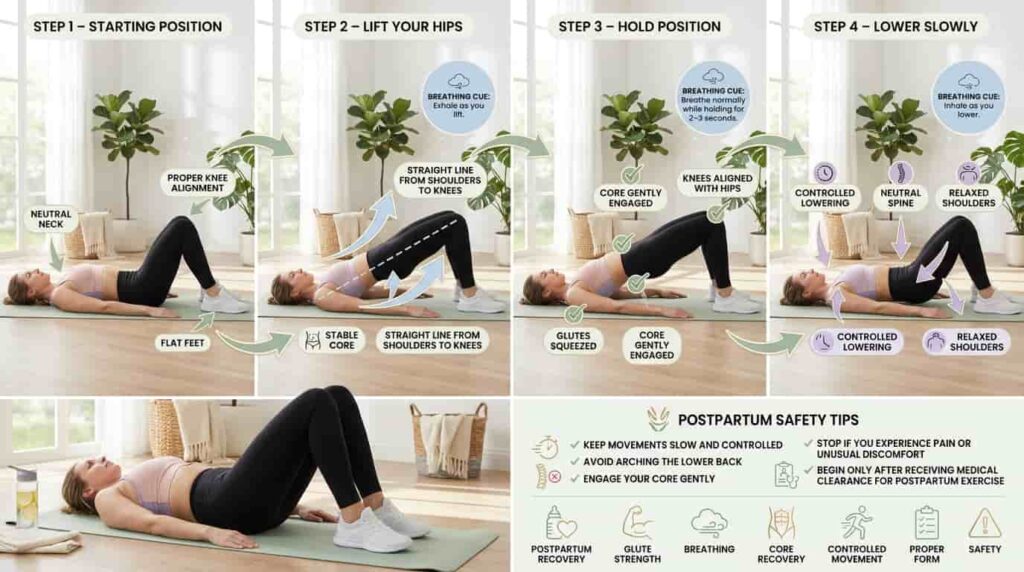
4. Glute Bridges
Glute bridges strengthen the hips, lower back, and core.
How to Do It
- Lie on your back.
- Bend your knees.
- Keep your feet flat.
- Tighten your glutes.
- Lift your hips.
- Pause for two seconds.
- Slowly lower.
Complete:
2–3 sets of 10–15 repetitions.
5. Bodyweight Squats
Squats strengthen the muscles used every day for lifting and carrying your baby.
Proper Form
- Stand with feet shoulder-width apart.
- Keep your chest up.
- Push your hips back.
- Lower slowly.
- Stand back up.
Perform:
2–3 sets of 10 repetitions.
6. Wall Push-Ups
Wall push-ups safely strengthen the chest, shoulders, and arms.
Instructions
- Stand facing a wall.
- Place your hands shoulder-width apart.
- Bend your elbows.
- Bring your chest toward the wall.
- Push back.
Repeat:
2 sets of 10–15 repetitions.
7. Bird Dog
This exercise improves balance and core stability.
Steps
- Begin on your hands and knees.
- Extend your right arm.
- Extend your left leg.
- Hold briefly.
- Return slowly.
- Switch sides.
Complete:
10 repetitions on each side.
8. Resistance Band Rows
Strong upper back muscles improve posture while feeding and carrying your baby.
Use a resistance band to perform slow, controlled rowing movements.
Aim for:
2–3 sets of 12 repetitions.
Sample Beginner Postpartum Workout Plan
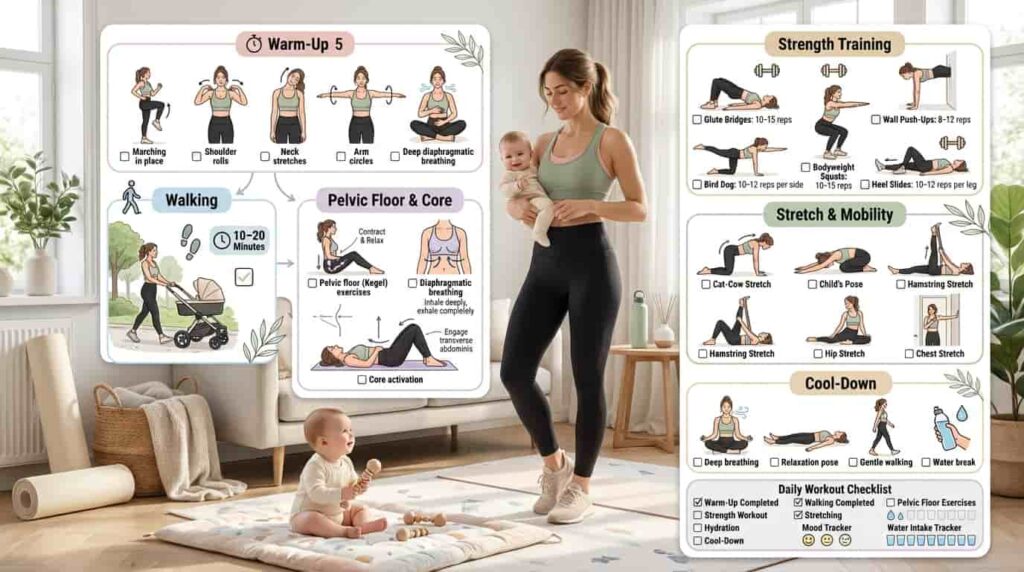
Here’s a simple full-body workout suitable for many moms after receiving medical clearance.
| Exercise | Reps |
|---|---|
| Walking | 15–20 minutes |
| Pelvic Floor Exercises | 15 reps |
| Diaphragmatic Breathing | 5 minutes |
| Glute Bridges | 15 reps |
| Bodyweight Squats | 10 reps |
| Wall Push-Ups | 10 reps |
| Bird Dog | 10 each side |
| Stretching | 5 minutes |
Complete this workout three times per week.
On other days, enjoy gentle walking or stretching.
Weekly Postpartum Workout Schedule
Monday
- Walking
- Core breathing
- Pelvic floor exercises
Tuesday
- Full-body strength workout
Wednesday
- Recovery walk
- Gentle stretching
Thursday
- Strength workout
Friday
- Walking
- Mobility exercises
Saturday
- Full-body workout
Sunday
- Rest
- Light stretching
- Hydration
How Long Should Postpartum Workouts Be?
You don’t need hour-long gym sessions.
Start with:
- 15–20 minutes
Progress to:
- 20–30 minutes
Eventually:
- 30–45 minutes
Consistency matters much more than workout length.
Safe Cardio Options
Low-impact cardio is usually the best choice during postpartum recovery.
Excellent options include:
- Walking
- Stationary cycling
- Swimming (after medical clearance)
- Elliptical
- Low-impact aerobics
Avoid high-impact cardio until your core and pelvic floor have regained strength.
Strength Training Tips
Strength training helps rebuild muscle lost during pregnancy.
Start with:
- Bodyweight exercises
- Resistance bands
- Light dumbbells
Increase weight gradually while maintaining proper form.
Never sacrifice technique for heavier weights.
Common Postpartum Workout Mistakes
Many new moms accidentally slow their recovery by doing too much too soon.
Avoid these common mistakes:
Starting Too Early
Your body needs time to heal.
Wait until you’ve received appropriate medical clearance before beginning structured exercise.
Ignoring Your Pelvic Floor
A strong pelvic floor supports your entire core.
Skipping pelvic floor exercises can increase the risk of urinary leakage and pelvic discomfort.
Doing Crunches Too Soon
Traditional crunches may worsen diastasis recti during early recovery.
Focus on deep core exercises instead.
Comparing Yourself to Other Moms
Every recovery is different.
Social media rarely shows the full recovery journey.
Focus on your own progress.
Exercising Through Pain
Pain is your body’s way of asking you to slow down.
Stop immediately if something doesn’t feel right.
Nutrition Tips to Support Recovery
Exercise is only one part of postpartum wellness.
Fuel your body with nutritious foods that support healing.
Prioritize:
- Lean protein
- Whole grains
- Fruits
- Vegetables
- Healthy fats
- Plenty of water
If you’re breastfeeding, your calorie and hydration needs may be higher.
FitMomWay Tip
Think of food as fuel for recovery, not something to fear. Nourishing your body helps you heal, care for your baby, and perform better during workouts.
Frequently Asked Questions
1. When can I start a postpartum workout?
Most women can begin gentle walking, breathing exercises, and pelvic floor exercises within a few days after childbirth if they feel comfortable and their healthcare provider has no concerns. More structured workouts usually begin after the six-week postpartum checkup, although recovery varies from person to person.
2. Is walking enough exercise after giving birth?
Yes. Walking is one of the safest and most effective postpartum exercises. It improves circulation, increases energy, supports weight loss, and helps your body recover without placing excessive stress on healing muscles.
3. Can I lose belly fat with postpartum workouts?
Postpartum workouts can help reduce overall body fat while strengthening your core. However, spot reduction isn’t possible. A combination of regular exercise, balanced nutrition, quality sleep, and patience produces the best long-term results.
4. Are postpartum workouts safe after a C-section?
Yes, but recovery usually takes longer after a C-section because it is major abdominal surgery. Always follow your healthcare provider’s advice before starting any exercise program. Begin with gentle walking and breathing exercises before progressing to strength training.
5. What exercises should I avoid after giving birth?
Avoid high-impact activities such as running, jumping, heavy lifting, intense abdominal workouts, and traditional crunches until your body has healed and you’ve been cleared by your healthcare provider.
6. How often should I exercise after pregnancy?
Aim for three to five workout sessions each week. Start with short sessions lasting 15 to 20 minutes and gradually increase the duration as your strength and endurance improve.
7. Can I work out while breastfeeding?
Yes. Exercise is generally safe while breastfeeding and does not reduce milk quality. Stay hydrated, wear a supportive sports bra, and eat enough nutritious foods to meet your increased energy needs.
8. How long does postpartum recovery take?
Every mom recovers differently. While many women feel stronger after six to twelve weeks, complete recovery of muscles, connective tissue, and the pelvic floor can take several months or longer.
9. Can postpartum workouts help with back pain?
Yes. Strengthening your core, glutes, and upper back while improving posture can reduce common postpartum back and neck pain caused by feeding, lifting, and carrying your baby.
10. What is the best postpartum workout for beginners?
A beginner-friendly postpartum routine includes walking, pelvic floor exercises, diaphragmatic breathing, glute bridges, bodyweight squats, wall push-ups, and gentle stretching. Focus on consistency rather than intensity.
Final Thoughts
Recovering after pregnancy isn’t about returning to your pre-pregnancy body as quickly as possible—it’s about building a stronger, healthier foundation for motherhood.
A well-planned postpartum workout can improve your strength, posture, energy levels, and confidence while helping your body recover safely. Start with gentle movement, listen to your body, and progress gradually as you become stronger.
Remember that every postpartum journey is different. Some moms recover quickly, while others need more time. Comparing your progress to someone else’s only adds unnecessary pressure. Celebrate every small improvement, whether it’s walking a little farther, feeling stronger, or simply having more energy to enjoy time with your baby.
The most successful postpartum fitness plan isn’t the hardest one—it’s the one you can follow consistently while allowing your body the time it needs to heal.
FitMomWay Tip
Small, consistent workouts performed several times each week will always produce better long-term results than pushing yourself too hard and risking injury.
Disclaimer
FitMomWay provides educational information only and does not offer medical advice. Always consult your doctor or qualified healthcare provider before starting any postpartum workout, exercise program, nutrition plan, or recovery routine, especially after a C-section, complicated pregnancy, or childbirth.