

Pregnancy is an exciting journey, but it also brings major changes to your body, energy levels, and daily routine.
Many women start pregnancy with the best intentions. They want to stay active, maintain their strength, and support a healthy pregnancy.
Then reality happens.
Morning sickness makes workouts feel impossible.
Fatigue drains your energy.
Your growing belly changes your balance.
And suddenly, you’re wondering if exercising during pregnancy is even safe.
If that sounds familiar, you’re not alone.
The good news is that staying fit during pregnancy doesn’t require intense workouts, expensive gym memberships, or hours of exercise every day.
In fact, simple activities like walking, stretching, and gentle strength training can make a huge difference in how you feel throughout pregnancy.
This guide will show you exactly how to stay fit during pregnancy safely, even if you’re a complete beginner.
Quick Answer
The best way to stay fit during pregnancy is to combine regular walking, pregnancy-safe exercises, healthy nutrition, proper hydration, and adequate rest. Most healthy pregnancies benefit from at least 150 minutes of moderate physical activity per week, spread across several days.
Table of Contents
Why Staying Fit During Pregnancy Matters
Many women think pregnancy is a time to slow down completely.
While rest is important, too much inactivity can create additional challenges.
Staying active during pregnancy may help:
- Improve energy levels
- Reduce pregnancy aches and pains
- Support healthy weight gain
- Improve sleep quality
- Strengthen muscles for labor and delivery
- Reduce stress and anxiety
- Improve circulation
- Support postpartum recovery
Think of fitness during pregnancy as preparation for one of the biggest physical events of your life: childbirth.
How to Stay Fit During Pregnancy Safely
The safest way to stay fit during pregnancy is to focus on low-impact exercise, healthy nutrition, hydration, and proper recovery. Most women can benefit from regular movement such as walking, stretching, and pregnancy-safe strength training.
FitMomWay Tip
You don’t need to exercise perfectly to benefit. Small daily movement is often more sustainable than occasional intense workouts.
Common Problems That Make Pregnancy Fitness Difficult
Before creating a fitness plan, it’s important to understand what often gets in the way.
Problem #1: Constant Fatigue
Many pregnant women feel exhausted, especially during the first trimester.
You may struggle to get through your workday, let alone complete a workout.
Solution
Instead of aiming for long workouts, focus on movement snacks:
- 10-minute walks
- Gentle stretching
- Short mobility sessions
- Light household movement
Even 10 minutes of activity is better than doing nothing.
Problem #2: Morning Sickness
Nausea can make exercise feel impossible.
Solution
Try exercising:
- Early morning before symptoms worsen
- After a light snack
- During the time of day you feel best
Walking is often easier to tolerate than high-intensity exercise.
Problem #3: Fear of Hurting the Baby
This is one of the most common concerns.
Many women avoid exercise entirely because they worry about safety.
Solution
For most healthy pregnancies, moderate exercise is considered safe and beneficial.
Always discuss your exercise plans with your healthcare provider, especially if you have a high-risk pregnancy.
The Beginner’s Pregnancy Fitness Formula
You don’t need a complicated workout plan.
Focus on five simple pillars:
- Walking
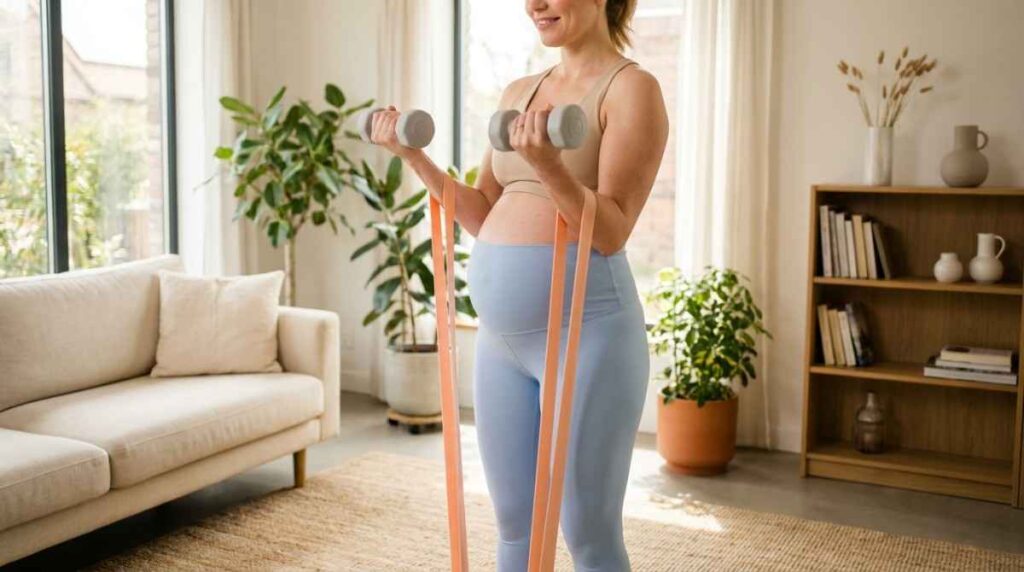
- Strength Training
- Stretching
- Hydration
- Recovery
Let’s break down each one.
Pillar 1: Walking During Pregnancy
If there were one exercise nearly every pregnant woman could benefit from, it would be walking.
Walking is:
- Free
- Low impact
- Beginner friendly
- Easy to adjust
Beginner Walking Schedule
Week 1:
- 10 minutes daily
Week 2:
- 15 minutes daily
Week 3:
- 20 minutes daily
Week 4:
- 25–30 minutes daily
The goal isn’t speed.
The goal is consistency.
Benefits of Walking During Pregnancy
- Improves circulation
- Supports healthy weight gain
- Reduces swelling
- Boosts mood
- Improves endurance

FitMomWay Tip
A daily walk after dinner can help digestion, improve sleep, and increase your overall activity level.
Pillar 2: Pregnancy-Safe Strength Training
Strength training during pregnancy is often misunderstood.
Many women think lifting weights is dangerous.
In reality, pregnancy-safe strength training can help support your changing body.
Benefits of Strength Training
- Stronger legs
- Better posture
- Reduced back pain
- Improved balance
- Easier daily movement
Beginner Pregnancy Strength Exercises
- Bodyweight squats
- Wall push-ups
- Glute bridges
- Bird dogs
- Side leg raises
Start with:
- 2 sessions per week
- 15–20 minutes each
Focus on proper form rather than intensity.
Pillar 3: Stretching and Mobility
As pregnancy progresses, muscles and joints can become tight and uncomfortable.
Gentle stretching may help:
- Improve flexibility
- Reduce tension
- Ease back discomfort
- Improve posture
Simple stretches include:
- Cat-cow stretch
- Hip circles
- Seated butterfly stretch
- Side stretches
- Neck rolls
Stretch slowly and avoid forcing any movement.

Pillar 4: Proper Nutrition for Pregnancy Fitness
Exercise is only one part of staying fit.
Nutrition plays an equally important role.
Focus on:
Protein
Protein supports:
- Baby’s growth
- Muscle recovery
- Satiety
Examples:
- Eggs
- Greek yogurt
- Chicken
- Fish
- Beans
Healthy Carbohydrates
Examples:
- Oats
- Brown rice
- Sweet potatoes
- Fruits
- Whole grains
Healthy Fats
Examples:
- Avocados
- Nuts
- Seeds
- Olive oil
A balanced diet helps fuel your body for movement and recovery.
Pillar 5: Recovery and Rest
One of the biggest mistakes pregnant women make is focusing only on exercise while ignoring recovery.
Your body is already working around the clock to support your growing baby.
Rest is not being lazy.
Rest is part of the fitness plan.
Prioritize Sleep
Sleep becomes more challenging as pregnancy progresses.
Try these tips:
- Use pregnancy pillows for support
- Sleep on your side when recommended by your healthcare provider
- Avoid large meals right before bed
- Take short walks during the day
- Maintain a consistent bedtime
Listen to Your Body
Some days you’ll feel strong and energized.
Other days you’ll feel exhausted.
That’s normal.
Adjust your activity level accordingly.
FitMomWay Tip
The best pregnancy fitness routine is one you can maintain consistently. Don’t compare your journey to someone else’s.
Pregnancy Fitness by Trimester
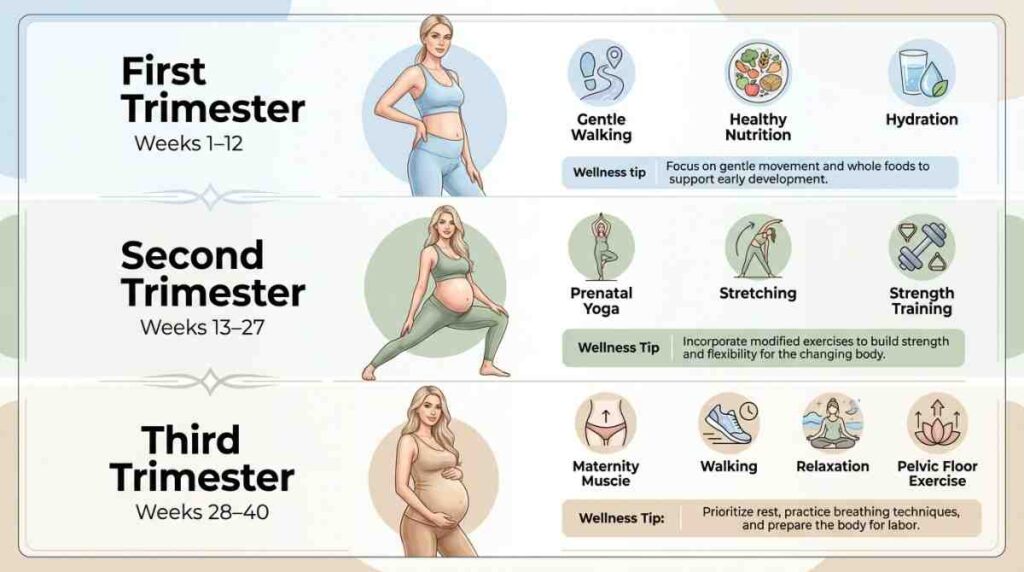
Every trimester brings different challenges.
Your fitness routine should evolve as your body changes.
First Trimester Fitness (Weeks 1–13)
Common Challenges
- Morning sickness
- Fatigue
- Low energy
- Food aversions
Fitness Goals
- Stay active
- Build healthy habits
- Avoid overexertion
Recommended Activities
- Walking
- Light stretching
- Prenatal yoga
- Gentle strength exercises
Sample First Trimester Workout
- 10-minute walk
- 10 bodyweight squats
- 10 wall push-ups
- Gentle stretching
Total time: 15–20 minutes
Remember, consistency matters more than intensity.
Second Trimester Fitness (Weeks 14–27)
Many women call this the “sweet spot” of pregnancy.
Energy levels often improve.
Morning sickness may decrease.
Fitness Goals
- Maintain strength
- Improve endurance
- Support posture
Recommended Activities
- Walking
- Strength training
- Prenatal yoga
- Swimming
Sample Second Trimester Workout
- 20-minute walk
- Bodyweight squats
- Glute bridges
- Bird dogs
- Stretching
Total time: 25–30 minutes
Third Trimester Fitness (Weeks 28–40)
As your baby grows, comfort becomes a priority.
Common Challenges
- Back pain
- Swelling
- Reduced mobility
- Fatigue
Fitness Goals
- Stay mobile
- Improve circulation
- Prepare for labor
Recommended Activities
- Walking
- Pelvic floor exercises
- Gentle stretching
- Mobility exercises
Sample Third Trimester Workout
- 15-minute walk
- Pelvic tilts
- Cat-cow stretches
- Hip circles
- Deep breathing exercises
Total time: 15–20 minutes
A Simple Weekly Pregnancy Workout Schedule
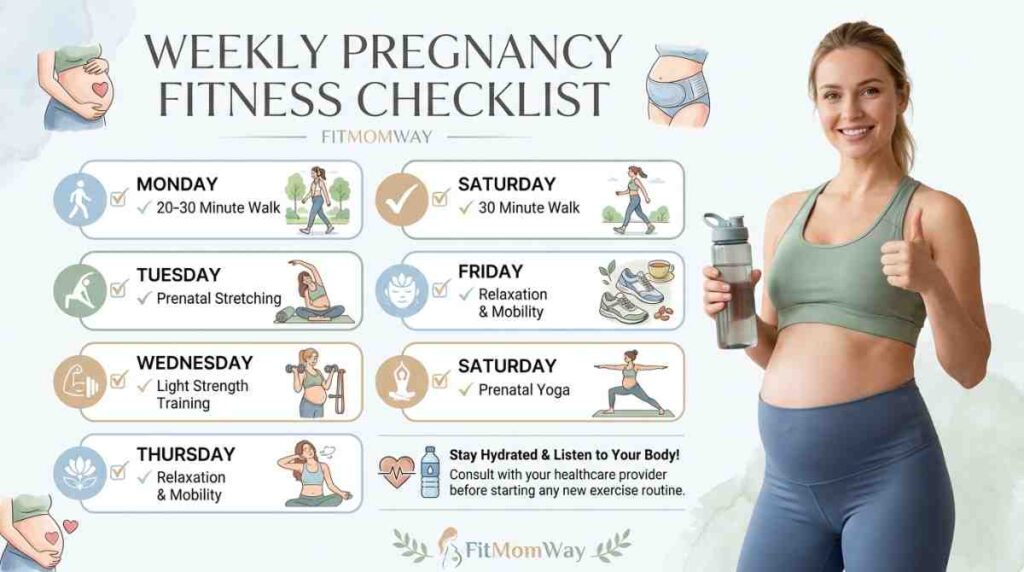
If you’re wondering exactly what to do each week, start here.
| Day | Activity |
|---|---|
| Monday | 20-minute walk |
| Tuesday | Strength workout |
| Wednesday | Stretching and mobility |
| Thursday | 20-minute walk |
| Friday | Strength workout |
| Saturday | Prenatal yoga or stretching |
| Sunday | Rest or light walk |
This schedule works for most beginners.
Adjust based on your energy levels and healthcare provider’s recommendations.
Common Pregnancy Fitness Mistakes
Avoiding these mistakes can help you stay active safely.
Mistake #1: Doing Too Much Too Soon
Many women try to maintain their pre-pregnancy fitness level.
Pregnancy is not the time to chase personal records.
Focus on maintenance rather than maximum performance.
Mistake #2: Ignoring Hydration
Pregnancy increases hydration needs.
Drink water before, during, and after exercise.
Signs of dehydration may include:
- Dizziness
- Headaches
- Fatigue
- Dark urine
Mistake #3: Skipping Warm-Ups
Always start with gentle movement.
A proper warm-up helps prepare your muscles and joints.
Mistake #4: Comparing Yourself to Others
Every pregnancy is different.
What works for one woman may not work for another.
Focus on your own progress.
Mistake #5: Sitting All Day
Even if structured workouts aren’t possible, regular movement throughout the day can make a big difference.
How to Stay Motivated During Pregnancy
Motivation often comes and goes.
Instead of relying on motivation, create habits.
Try These Strategies
- Schedule workouts on your calendar
- Walk with a friend
- Track your daily activity
- Set realistic goals
- Celebrate small wins
Remember Your Why
Staying active may help you:
- Feel stronger
- Improve energy
- Support a healthy pregnancy
- Prepare for labor
- Recover after childbirth
Frequently Asked Questions
Is it safe to exercise during pregnancy?
For most healthy pregnancies, moderate exercise is considered safe. Always consult your healthcare provider before starting a new fitness program.
How many days per week should I exercise?
Most women can aim for regular activity throughout the week, with rest days as needed.
Is walking enough exercise during pregnancy?
Walking is one of the best forms of pregnancy exercise and can provide significant health benefits.
Can I do squats while pregnant?
Many pregnant women can safely perform bodyweight squats, but individual recommendations may vary.
Can exercise harm my baby?
Moderate, pregnancy-safe exercise is generally beneficial for both mother and baby when approved by a healthcare provider.
What exercises should I avoid during pregnancy?
Activities with a high risk of falls, direct abdominal impact, or excessive strain should typically be avoided.
Can I start exercising if I was inactive before pregnancy?
Yes. Many women safely begin with walking and other gentle activities after discussing plans with their healthcare provider.
Is strength training safe during pregnancy?
When performed correctly and with appropriate modifications, strength training can be beneficial during pregnancy.
How much walking should I do each day?
Even 15–30 minutes of walking can be a great starting point for many pregnant women.
When should I stop exercising and contact my healthcare provider?
If you experience unusual symptoms, discomfort, or concerns during exercise, stop and seek medical advice.
Conclusion
Staying fit during pregnancy doesn’t have to be complicated.
You don’t need intense workouts, expensive equipment, or hours at the gym.
The most effective approach is often the simplest:
- Walk regularly
- Strengthen your muscles
- Stretch daily
- Stay hydrated
- Get enough rest
Remember, pregnancy fitness is not about achieving perfection.
It’s about supporting your body through one of life’s most incredible journeys.
Start small.
Stay consistent.
And focus on progress rather than perfection.
A few minutes of movement each day can add up to meaningful benefits for both you and your baby.
Disclaimer
FitMomWay provides educational and informational content only and does not offer medical advice, diagnosis, or treatment. The information in this article is not intended to replace professional medical guidance.
Every pregnancy is unique. Always consult your healthcare provider, obstetrician, midwife, or other qualified healthcare professional before starting any exercise, fitness, nutrition, or wellness program during pregnancy.
If you experience pain, dizziness, shortness of breath, bleeding, contractions, or any unusual symptoms while exercising, stop immediately and seek medical attention.


[…] pregnant women enjoy this stretch because it creates space through the torso and feels especially good during the […]
[…] following postpartum fitness plan is designed for healthy women who have received guidance from their healthcare […]
[…] Many women feel their best during the second trimester. […]
[…] complete guide will teach you everything you need to know about mom fitness, including how to start safely, choose the right workouts, stay motivated, and create a routine you […]
[…] following pregnancy yoga poses are considered safe for most healthy pregnancies when performed correctly. Always move slowly, avoid pain, and stop if you feel dizzy or […]